Cultivated meat: a reality check
· 7 min read · by Henrik Aalto
In December 2020 a regulator in Singapore cleared a chicken product grown from cells for sale, and a technology that had been a press-release staple since 2013 became, briefly, real. Nearly six years later, cultivated meat is legally saleable in a handful of jurisdictions, explicitly illegal in a growing number of others, and in practice almost impossible to buy. The gap between those three facts is the story.
I want to be fair to it. The science is genuinely interesting and the people doing it are not frauds. But the engineering constraints are specific, they were visible early, and they have not gone away.
How you actually make it
Four problems, each solved to a different degree.
A cell line. You need animal cells that divide indefinitely and reliably. Primary cells taken from a biopsy divide a limited number of times and stop. So companies use immortalised lines, which have acquired or been given mutations that remove that limit, or pluripotent stem cells coaxed down a muscle or fat path. Picking species matters more than you might expect: fish and poultry cells are often easier to grow than bovine ones, and they tolerate a wider range of temperatures, which is one reason so much of the sector drifted towards chicken, quail, salmon and pork fat.
A growth medium. This is the hard part. Cells need sugars, amino acids, salts, vitamins and, crucially, protein growth factors that tell them to divide. The original research medium contained foetal bovine serum, which is expensive, variable and awkward for a product whose selling point is not killing animals. Serum-free formulations exist, but they rely on recombinant growth factors such as insulin, transferrin and FGF2, made by fermentation and priced for pharmaceutical use. Getting those to food prices means producing them at volumes the biologics industry has never needed, at purity standards nobody has yet agreed, and accepting that a growth factor made cheaply is a growth factor made less consistently. Media cost has been the dominant line item in nearly every published analysis.
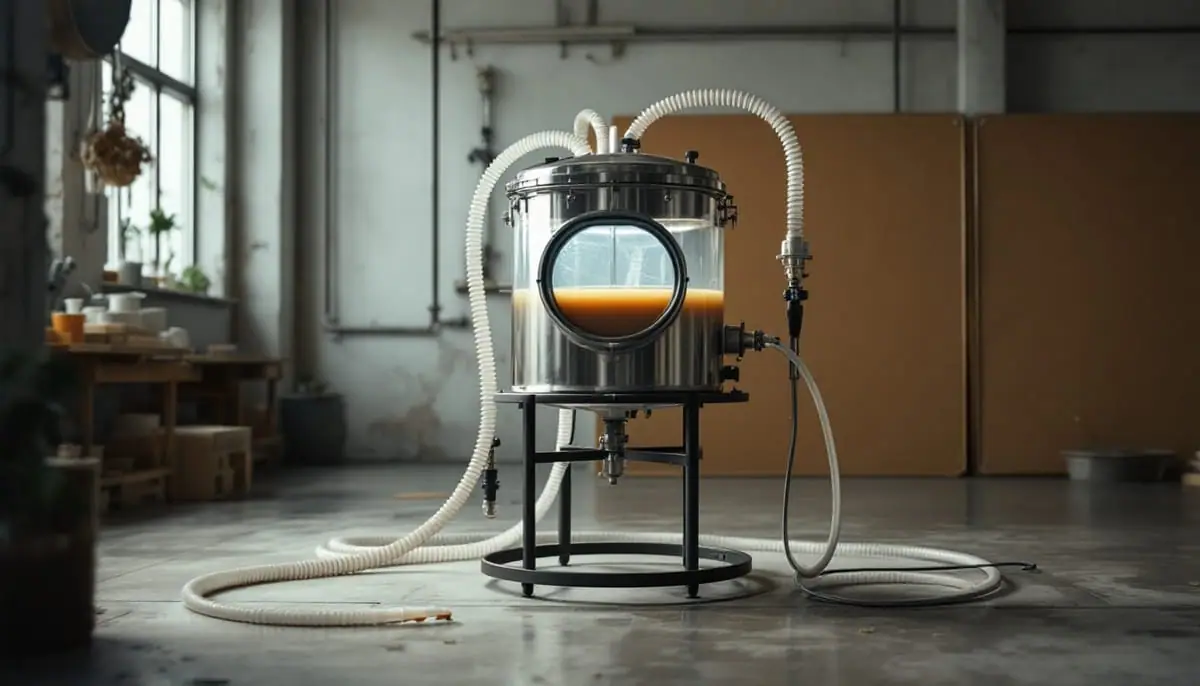
A bioreactor. Animal cells are fragile. They shear in turbulent flow, they need oxygen delivered without foaming, and they poison themselves with lactate and ammonia. The usual fixes, bigger impellers and harder sparging, break the cells. Perfusion systems that continuously exchange medium help and add cost and complexity. There is also no antibiotic safety net: a food process cannot lean on them, so everything must run sterile, which is why the facilities look like pharmaceutical plants and cost like them.
Texture. Cells grown in suspension give you a paste. A nugget or a fillet needs scaffolding, co-cultured fat, alignment of muscle fibres and often perfusion through the tissue. This is why almost every product on sale is a blend: a fraction of cultivated cells in a plant-protein matrix. There is nothing dishonest about that, as long as it is stated, but a hybrid nugget is not the steak of the original pitch.
What has actually been approved
| Where | When | What |
|---|---|---|
| Singapore | December 2020 | Cultured chicken, the world's first approval |
| United States | June 2023 | Two companies cleared by FDA and USDA for cultivated chicken |
| Israel | early 2024 | Cultivated beef, a national first |
| Singapore | 2024 | Cultured quail, served in a restaurant |
| United Kingdom | mid-2024 | Cultivated chicken in pet food |
| Australia and New Zealand | 2025 | Cultured quail, after a food standards assessment |
| United States | 2025 | Cultivated pork fat; cultivated salmon, the first cleared seafood |
Two patterns stand out. The approvals cluster in small, regulator-friendly markets or in the US system, where the FDA assesses the cells and process and the USDA handles labels and inspection for livestock and poultry. And the later ones are mostly ingredients, fat, paste, a component of a blended product, rather than cuts of meat. That is a sensible retreat towards what the technology can do.
In the European Union, the first novel food application for a cultivated product was filed in mid-2024, for a cell-grown duck product; others followed. EU novel food assessment is thorough and slow, and a first authorisation there was still pending as of 2026. The United Kingdom took a different route, running a regulatory programme with a cohort of companies to work out how to assess these products while assessing them, with a stated aim of completing a couple of full safety assessments within two years.
And what has been banned
Italy legislated against producing or selling cultivated meat in November 2023, the first country to do so, with fines attached. In the United States, Florida and Alabama passed bans in 2024, and several more states followed in 2025, among them Indiana, Mississippi, Montana, Nebraska and Texas, some as outright prohibitions and some as multi-year moratoria. Companies with federal approval have sued, arguing that states cannot block a federally inspected product and that the laws discriminate against out-of-state commerce. Those cases were still working through the courts in 2026.
The notable thing about the bans is that they mostly forbid something nobody was selling in those states. They are position-taking: a cheap way to side with cattle producers against a technology that has not yet proved it can compete. Whether that is protectionism or prudence depends on where you sit, but it is not a response to a safety finding.
The numbers that have not moved
Several independent techno-economic analyses have reached broadly the same conclusion since 2021, the most cited being David Humbird's for Open Philanthropy (doi:10.1002/bit.27848). Under optimistic assumptions about media cost, cell density and facility utilisation, production lands somewhere well above commodity meat prices. Under cautious assumptions, it lands far above. The binding constraints are the ones above: the medium, the oxygen and shear limits on reactor size, and the capital cost of sterile plant.
Scale is the other sobering figure. Global meat production runs to hundreds of millions of tonnes a year. The world's entire installed capacity for mammalian cell culture, built over decades to make antibodies and vaccines that sell for thousands of dollars a gram, amounts to a few million litres. Replacing even a rounding error of the meat supply implies building more bioreactor volume than the biopharmaceutical industry has ever built, for a product that must sell for a few dollars a kilo. That is not a reason it cannot be done. It is a reason to be suspicious of any timeline measured in a handful of years.
Investment followed the arithmetic. Funding peaked around 2021, fell sharply in 2023 and has stayed low. Several companies have closed, merged or pivoted to selling ingredients, equipment or cell lines to other companies. A few have built pilot plants. Pilot plants are not commercial plants, and the step between them is where this sector keeps stalling.
The environmental case is likewise unsettled. Favourable life-cycle assessments assume cheap renewable electricity, food-grade rather than pharmaceutical-grade inputs and high reactor efficiency. Less favourable ones, including analyses that take today's purification-heavy media seriously, find emissions comparable to or worse than beef. Both are modelling an industry that does not exist at scale, so both are projections. Anyone quoting a single percentage reduction is quoting an assumption.
What a sober reader should expect
Not a replacement for the meat supply, this decade or next. The constraints are physical, not regulatory.
Ingredients before cuts. Cultivated fat blended into plant-based products is the most plausible near-term business, because fat carries flavour, needs no fibre alignment and can be a small fraction of the finished item.
Pet food and premium niches first. Lower regulatory thresholds, customers less bothered by texture, higher tolerance for price.
More bans before more products. Legislating against a technology is cheaper than scaling one.
Real scientific progress regardless. Serum-free media, food-grade growth factors and robust cell lines are useful well beyond meat, and that work is advancing.
What I would watch is unglamorous: the published cost of a litre of medium, the cell density achieved in a reactor larger than a few thousand litres, and whether any company runs a plant continuously for a year. Those three numbers decide the question. Celebrity tastings and regulatory firsts do not.
There is also a question of what problem is being solved. If the goal is less environmental damage from livestock, the comparison is not cultivated meat against beef, but cultivated meat against every other way of getting there: better grazing management, shifting consumption towards plants, fermented proteins, or the farm-level changes discussed in our piece on agroecology on the farm. Some of those are available now and need no new bioreactors. Cultivated meat also concentrates food production into capital-intensive facilities owned by a few firms, which, as our look at concentration ratios in agribusiness suggests, is a choice with consequences of its own.
And it is a near-perfect case for the kind of public, independent assessment argued for in bring back technology assessment: a technology whose promoters and whose opponents have both been confidently wrong, where the decisive facts are engineering facts, and where the loudest claims in either direction have usually come from people with something to sell or an industry to protect.

Written by Henrik Aalto
Henrik writes about genetic engineering, gene editing and synthetic biology – the science, the patents and the gap between a press release and a product. He reads the supplementary data so you do not have to.