Soil carbon: what the science can promise, and what it can't
· 8 min read · by Marisol Ortega
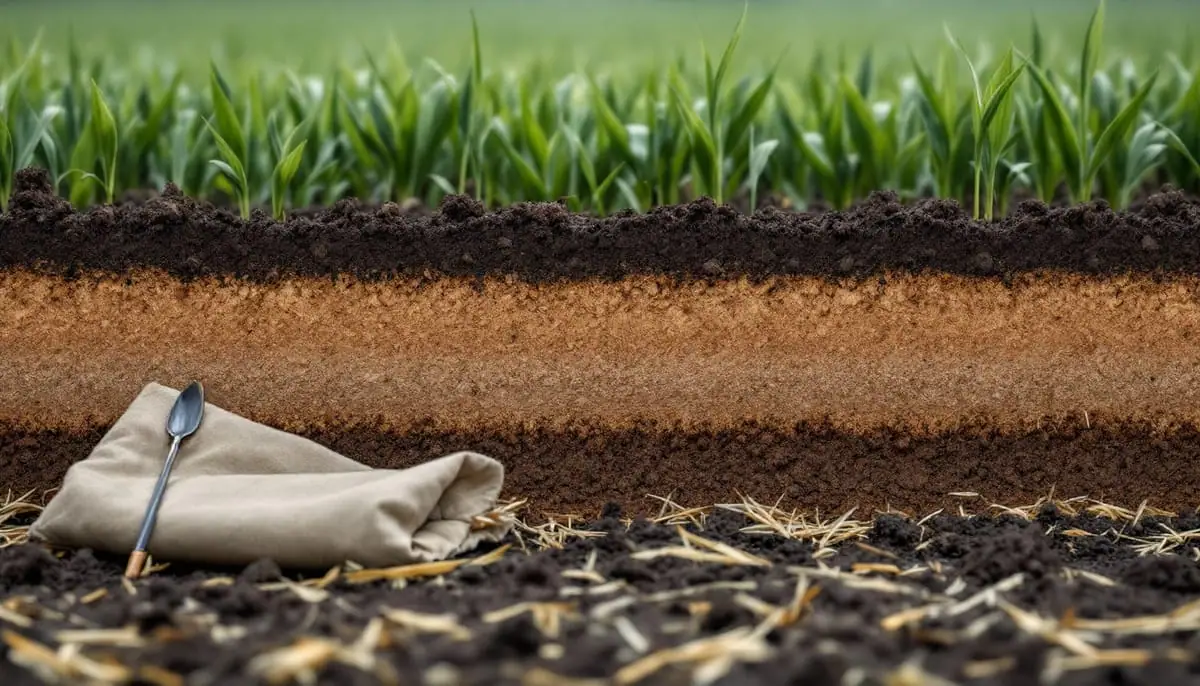
Pick up a handful of soil from an old pasture and another from a field that has been plowed every year for fifty years. The first is darker, crumbles into small rounded clumps and smells of rain. The second is paler and falls apart into dust or sets into clods. Much of the difference is organic matter, and roughly half of organic matter is carbon.
Since the mid-2010s that dark material has been asked to do a new job: to help pull carbon dioxide out of the air and, in some schemes, to earn farmers money for doing it. Some of the hopes are well founded. Some are not. This is a guide to telling them apart.
How soils store carbon
Plants take carbon dioxide from the air and turn it into leaves, stems and roots. Some of that carbon goes into the soil as dead roots, crop residues and the sugars roots leak into the ground around them. Soil microbes and animals eat most of it and breathe the carbon back out. A part survives, often as the remains of the microbes themselves, and some of it binds tightly to fine clay and silt particles, where it can stay for decades or centuries. Soil scientists distinguish this mineral-associated fraction from the looser particulate organic matter, which turns over much faster.
Soil carbon at any moment is a balance between what goes in and what comes out. To build it, a farmer can increase the inputs (more roots, more residues, more manure or compost) or slow the losses (less disturbance, less erosion). Both have limits.
Globally, soils hold more carbon than the atmosphere and all living vegetation combined. Farming has drawn that store down: one widely cited estimate puts the historical loss from agricultural land at more than 100 billion tonnes of carbon. That is why putting some of it back looks like such an obvious climate win.
The 4 per 1000 idea
At the Paris climate conference in December 2015, France launched the 4 per 1000 initiative. The name comes from a piece of arithmetic: if the carbon stored in the world's soils, in the top layers, grew by 0.4 percent a year, the increase would roughly match the annual rise of carbon dioxide in the atmosphere from human activity. Governments, research institutes, farm organizations and NGOs signed up in large numbers.
The number was always more of a rallying point than a forecast, and the initiative itself frames it as an aspiration tied to food security, not only to climate. Scientists raised several objections all the same. The arithmetic assumes gains across all soils, including forests and rangelands that farmers do not manage. Analyses of long-running field experiments, including those at Rothamsted in England, suggested that reaching 0.4 percent a year on arable land usually required very large additions of manure or turning cropland into grassland, neither of which can be done everywhere. And soil organic matter contains nitrogen and phosphorus in fairly fixed proportions to its carbon, so building carbon also locks up nutrients that have to come from somewhere, whether from fertilizer, legumes or manure.
The initiative's lasting achievement may be that it put soil on the climate agenda and got agriculture ministries talking to environment ministries. That is not nothing. It just isn't a solution to fossil fuel emissions.
Four reasons measurement is hard
Depth
Most soil carbon studies and many carbon programs sample the top 30 centimeters. That matters because some practices move carbon around rather than adding it. No-till farming, for example, tends to concentrate carbon near the surface while deeper layers can hold less than under plowing. Early studies that sampled only the topsoil overstated the gains; when researchers measured deeper, the net benefit of no-till often shrank to little or nothing. A 2014 paper by David Powlson and colleagues in Nature Climate Change argued that its climate potential had been widely exaggerated. Changes in soil density complicate things further, which is why careful studies compare equal masses of soil rather than fixed depths.
Variability
Carbon varies enormously across a single field: hilltops against hollows, old hedge lines, the spot where a manure heap stood thirty years ago. Topsoil carbon stocks typically run to tens of tonnes per hectare, and the changes a carbon program hopes to detect are small fractions of that. Picking up a real change against that background takes many samples and several years. That is why most credit schemes lean on computer models, calibrated with some sampling, to estimate gains, and models are least reliable at exactly the scale of a single farm.
Permanence
Carbon in soil can leave as easily as it arrived. A drought, a return to plowing, a new tenant or the sale of the land can release years of gains in a season or two. Carbon dioxide from burning fossil fuels, by contrast, keeps warming the planet for centuries. Credit schemes try to bridge that gap with long contracts and buffer pools of unsold credits, but a promise that a field will stay managed the same way for decades is a big ask of any farmer, and a bigger one of their children.
Saturation
Soils do not keep absorbing carbon forever. When management changes, carbon rises fastest in the first years and then levels off as the soil approaches a new balance, often over a few decades; the default methods of the Intergovernmental Panel on Climate Change assume such changes play out over twenty years. Fine-textured soils can hold more stable carbon than sandy ones, because they have more mineral surface to bind it, but every soil has a ceiling. A soil carbon sink is a one-off deposit, not a flow that continues indefinitely.
Credits and their critics
From around 2020, soil carbon became a product. Startups and agribusinesses in the United States began offering farmers payments per tonne of carbon or per acre of changed practice. Carbon registries such as Verra and the Climate Action Reserve published methods for crediting farm soil carbon. Australia built soil carbon into its government-run carbon credit scheme. In 2024 the European Union adopted a regulation setting up a certification framework for carbon removals and carbon farming, with detailed certification methods developed in the period since.
Critics have raised the same problems again and again:
- Additionality. Many schemes pay farmers who already used the practices, which buys no new carbon.
- Measurement. Credits rest on model estimates with wide margins of error at field scale.
- Permanence. Contracts that are short compared with the climate problem, or long compared with a farmer's planning horizon.
- Leakage. If less is produced on one field, production may shift to another.
- Data and control. Programs often require farmers to hand over detailed field records, raising the same questions about who owns farm data that come up with digital agriculture generally.
- Offsetting. A tonne of soil carbon that may leak back out is not the equivalent of a tonne of fossil carbon left in the ground, so using one to cancel out the other flatters the buyer.
That last point is the deepest. Like the green economy agenda of the early 2010s, soil carbon markets turn a natural process into a tradeable unit, and the unit is most useful to whoever needs permission to keep emitting. The same pattern runs through other carbon-removal promises, from tree plantations to the proposals to fertilize the ocean with iron.
There are fairer versions. Some programs pay for adopting practices rather than for tonnes, which is more honest about the uncertainty. Public payments for soil health, tied to clear practices and not sold on as offsets, avoid most of the offsetting problem. The money is often modest either way.
Practices and what to expect
| Practice | Likely effect on soil carbon | Caveats |
|---|---|---|
| Cover crops between cash crops | Modest, steady gains in topsoil over years | Seed, labor and water costs; gains stop if the practice stops |
| No-till or reduced tillage | Moves carbon toward the surface; net gain across the full profile often small | Can increase herbicide use; shallow sampling overstates gains |
| Manure and compost | Clear rise in measured carbon on the receiving field | Often carbon moved from elsewhere rather than new removal; nutrient losses if overapplied |
| Rotations with grass or legume leys | Gains during the ley years | Needs a use for the forage, usually livestock |
| Converting cropland to grassland or woodland | Among the largest and most reliable gains | Takes land out of crop production; food may be grown elsewhere instead |
| Agroforestry, hedgerows, trees on farms | Carbon in wood and soil; relatively durable | Slow; trees compete with crops; needs secure land tenure |
| Biochar | Very stable carbon | Depends on feedstock and kiln emissions; costly; crop response varies |
| Changed grazing management | Highly variable and site-specific | Strong claims for some grazing systems are poorly supported |
| More nitrogen fertilizer to grow bigger crops | Can raise residue inputs | Nitrous oxide emissions can cancel the climate benefit |
What farmers gain anyway
Here is the good news, and it is real. Building soil organic matter makes farms work better, whether or not anyone pays for the carbon.
Soils richer in organic matter hold together in stable crumbs, so they resist crusting and erosion, let rain soak in instead of running off, and are easier to work. Organic matter feeds the soil life that cycles nutrients and slowly releases nitrogen, phosphorus and sulfur to crops. A global meta-analysis published in 2019 found that maize and wheat yields tend to rise with soil organic carbon up to about 2 percent and level off above that, which suggests the biggest payoffs come on depleted soils, the ones many smallholders farm. Water-holding capacity improves too, though a 2018 review by Budiman Minasny and Alex McBratney found the effect smaller than popular claims suggest.
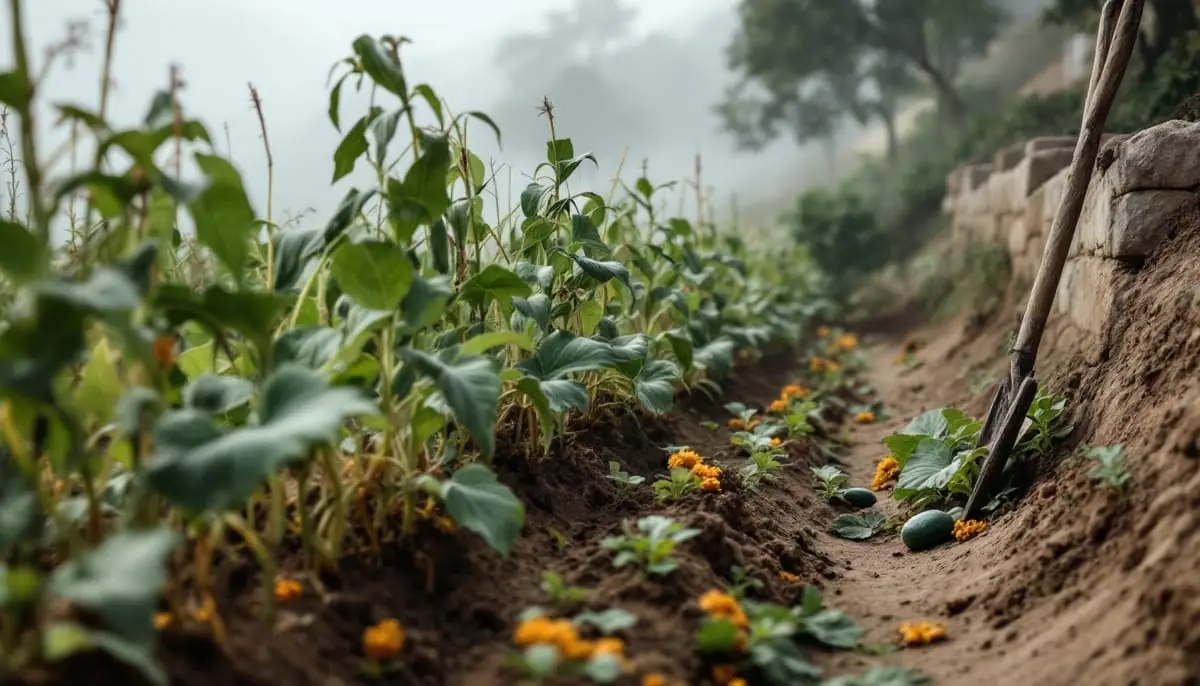
Smallholders in Latin America have known much of this for a long time. Hillside farmers in Central America who grow velvet bean as a green manure between maize crops, or who leave residues as mulch instead of burning them, were not doing it for carbon markets. They did it because the soil stayed put on the slope and the maize grew better.
That is the honest pitch. Build soil because it makes a farm more fertile and more resilient in a drought. Count the carbon as a welcome side effect. Just don't sell it as a license for someone else to keep burning coal.

Written by Marisol Ortega
Marisol covers seeds, smallholder farming and the rules that decide who may save, swap or sell them. She has spent a long time around maize fields and seed fairs and still thinks maize is the most political plant there is.