Are GMOs good or bad? Three questions with three different answers
· 9 min read · by Henrik Aalto
Book links may earn us a commission. As an Amazon Associate I earn from qualifying purchases.
Are GMOs good or bad? The honest answer is that it is three questions wearing one coat, and they come out differently. On whether approved GM foods are safe to eat, the evidence is about as settled as food science gets: the major scientific bodies that have looked have found no sign that they carry more risk than their conventional counterparts. On what GM crops do in the field, the record is mixed, and it depends heavily on the trait and on how farmers use it. On who owns the seed and who profits, the critics have most of the facts on their side.
So "good or bad" is the wrong frame. A better one is: good or bad at what, for whom, and compared with what? Below are the three questions one at a time, after a definition, because half the arguments about GMOs are really arguments about a word.
What "GMO" actually means
In everyday use, a GMO (genetically modified organism) is a plant or animal whose DNA has been changed in a laboratory with recombinant DNA techniques, usually by inserting a gene from another species. The best-known examples are crops carrying a gene from the soil bacterium Bacillus thuringiensis, which makes a protein toxic to certain insect larvae, and crops carrying a bacterial gene that lets them survive spraying with the herbicide glyphosate.
That definition has soft edges. Plant breeders have been changing crop DNA for a century by other means: crossing distant relatives, doubling chromosomes with chemicals, and exposing seeds to radiation or mutagenic chemicals to create random mutations, then keeping the useful ones. None of that counts as GMO under most laws. Gene editing blurred things further, because an edited plant may carry no foreign DNA at all. Europe has spent years deciding whether such plants should be regulated as GMOs, a fight I followed when the European Parliament voted on gene-edited plants. For the longer story of how we learned to read and then rewrite DNA, Siddhartha Mukherjee's The Gene (Amazon (book)) is the readable version.
Labels add a third layer. A US package might say "bioengineered", "Non-GMO Project Verified" or "USDA Organic", and those mean different things; our explainer on what non-GMO actually means sorts them out.
For this piece, "GMO" means the transgenic crops grown commercially since the mid-1990s. Four crops dominate: soybean, maize, cotton and canola. Two traits dominate: herbicide tolerance and insect resistance. In the United States, USDA surveys have for years put the share of soybean, corn and cotton acres planted with GM varieties at more than nine in ten.
Question one: is GM food safe to eat?
This is the question most people mean, and it has the clearest answer.
The most thorough review is the 2016 report of the US National Academies of Sciences, Engineering, and Medicine, Genetically Engineered Crops: Experiences and Prospects. Its committee worked through hundreds of studies and found no substantiated evidence that foods from GM crops were less safe than foods from conventionally bred crops. It also compared long-run health trends in the US and Canada, where GM foods have been eaten widely since the late 1990s, with the UK and western Europe, where they mostly have not. It found no pattern in cancer, obesity, kidney disease, autism or allergies that would point to GM food.
The World Health Organization takes a similar line: the GM foods on the international market have passed safety assessments and are not likely to present risks to human health, with the caveat that each new product has to be assessed on its own. National food-safety agencies in Europe, Australia and elsewhere have reached the same conclusion, product by product.
Two details matter.
First, the consensus covers approved products, not the technique in the abstract. You could engineer a harmful plant. The point of regulation is to catch it before it reaches a plate.
Second, the system has caught problems. In the 1990s a soybean carrying a protein from Brazil nuts was found, in laboratory and skin-prick tests, to set off the same reactions as Brazil nuts in people allergic to them, and the project was dropped. In 2000, StarLink corn, approved only for animal feed because regulators could not rule out that its insecticidal protein was an allergen, turned up in taco shells and set off a nationwide recall. Nobody was shown to have been harmed. It was a failure of segregation, not evidence of a toxic crop, but it did lasting damage to trust.
And the studies that claimed harm? The best known, a 2012 French rat-feeding study, was retracted by its journal the following year over its design and small group sizes, then republished in another journal. On this narrow question, the case against GM food has had three decades to find a casualty and has not found one.
Question two: what do GM crops do in the field?
Here the answer is "it depends", and what it mostly depends on is evolution.
Herbicide-tolerant crops
Glyphosate-tolerant soybeans reached American farms in 1996 and sold fast. They made weed control simple: plant, spray one cheap herbicide over the top of the growing crop, finish. They also made it easier to stop ploughing, which cuts soil erosion.
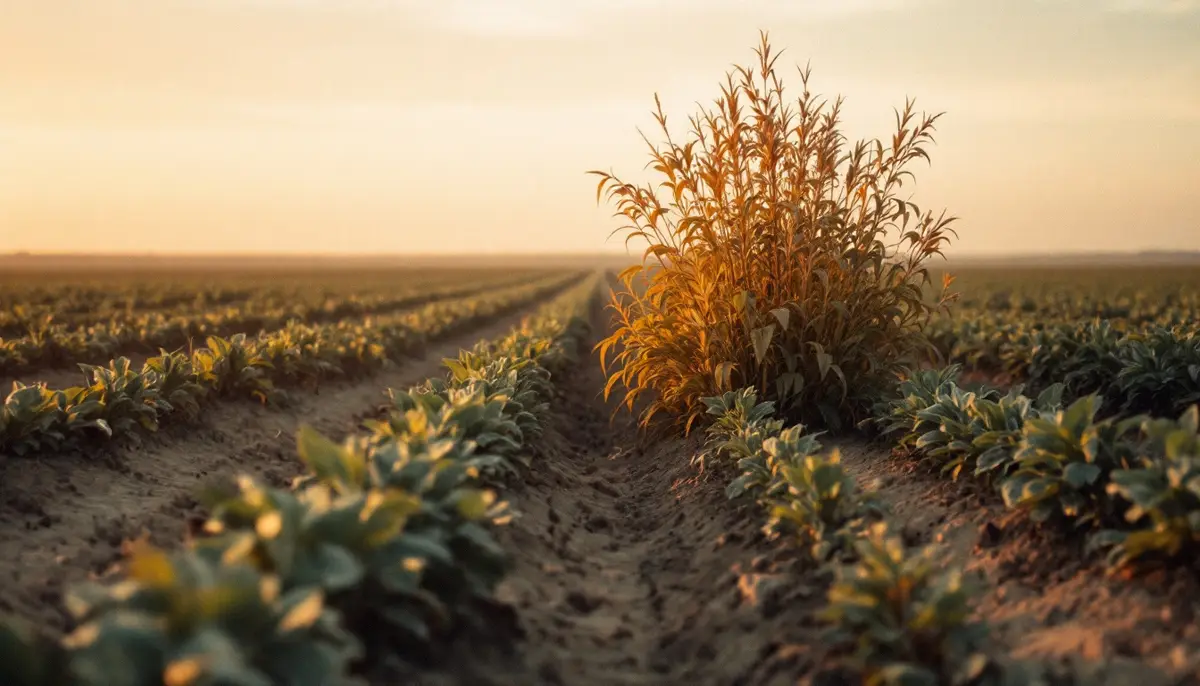
The simplicity was the problem. Spraying one herbicide over tens of millions of acres, year after year, is a selection experiment on a continental scale, and weeds did what selected populations do. Glyphosate-resistant Palmer amaranth, waterhemp and horseweed spread across the US South and Midwest through the 2000s. Palmer amaranth grows fast and a single plant can shed hundreds of thousands of seeds, so a few survivors become a field problem within a couple of seasons. Some cotton growers went back to paying crews to hoe.
The industry's answer was the same strategy with different molecules: crops tolerant to dicamba and 2,4-D, older herbicides that drift and vaporise more readily. Dicamba drift damaged neighbouring crops and trees in several states and generated thousands of complaints, and US federal courts have twice thrown out approvals for spraying it over growing crops.
The National Academies report called herbicide-resistant weeds a major agricultural problem. That is the strongest environmental case against this trait. The plant itself is not dangerous. It encouraged a one-tactic weed control system that was always going to break.
Insect-resistant crops
Bt crops have a better record, with a familiar asterisk. Because the plant makes its own insecticidal protein, Bt cotton and Bt maize cut the need for sprayed insecticides in many places, sometimes sharply. In northern China, Bt cotton suppressed cotton bollworm across whole regions; in the US Midwest, Bt maize knocked back the European corn borer so widely that farmers growing ordinary maize benefited too.
The asterisk is resistance again. Regulators required "refuges", blocks of non-Bt crop where susceptible insects survive and dilute any resistance genes. Where refuges were small or ignored, resistance came. Pink bollworm in India overcame Bt cotton within about a decade of its introduction. Western corn rootworm in Iowa adapted to a Bt maize protein within about six years, a story told alongside the Mayan beekeepers who found GM pollen in their honey in Bitter honey. Traits, like pollen, do not stay where they are planted, and their costs can land on people who never chose them.
The scorecard
| Trait | What was promised | What happened |
|---|---|---|
| Glyphosate tolerance | Simple, cheap weed control; easier no-till | Worked for about a decade, then resistant weeds and a turn to dicamba and 2,4-D |
| Insect resistance (Bt) | Fewer insecticide sprays | Large cuts in many regions; resistance where refuges failed |
| Virus resistance (Hawaiian papaya) | Save a crop from ringspot virus | Roughly that; Hawaii's papaya growers stayed in business |
| Extra vitamin A (golden rice) | A cheap fix for deficiency | Approved in the Philippines in 2021, halted by a court in 2024 |
On yields, the National Academies committee found that GM traits mostly protect yield by reducing losses to pests and weeds. National data did not show them speeding up the long-run rate of yield gain in US maize, soybean or cotton.
Question three: who owns the seed?
This is where the critics stand on firmest ground, though not always for the reasons they give.
GM traits are patented. Farmers who buy patented seed sign agreements that forbid saving and replanting it. In 2013 the US Supreme Court ruled unanimously in Bowman v. Monsanto that a farmer could not get around this by buying cheap commodity soybeans from a grain elevator and planting them: the patent reached the copies the plants made of themselves. Europe has had its own patent battles, including the one over a patent covering every GM soybean, revoked in 2007 after a fight lasting more than a decade.
Patents sit on top of concentration. A wave of mergers between 2015 and 2018 (Dow with DuPont, ChemChina with Syngenta, Bayer with Monsanto) left a handful of companies controlling most of the world's commercial seed and pesticide sales. Here is the irony that both camps tend to skip: strict, expensive approval rules favour exactly those companies, because only they can afford years of regulatory dossiers for every new trait. The few public-sector GM crops that reached farmers, such as the Hawaiian papaya or the Bt eggplant grown in Bangladesh, are the exceptions that prove how high the wall is.
For adopting farmers, the National Academies found the economics generally favourable, with wide variation by place and pest pressure. That is compatible with a system in which farmers do reasonably well and seed companies do much better.
So, good or bad?
Safe to eat? Approved GM foods, yes, on the evidence of three decades and every major scientific review.
Good for the environment? Sometimes. A trait is a tool, and its effect depends on whether it is used inside a sensible farming system or as a replacement for one. Bt crops used with refuges reduced spraying; glyphosate tolerance used as a single answer bred its own failure.
Good for farmers and food systems? That is an argument about patents, market power and who sets the research agenda. It is a real argument. It is just not about molecules, and treating it as a food-safety scare has let the industry win the easy debate while the harder one goes unattended.
FAQ
Are GMOs bad for your health? The approved GM foods on the market have not been shown to be less safe than conventional foods, according to the US National Academies, the WHO and national food-safety agencies. For questions about your own diet, a doctor or registered dietitian is the right source.
Do GMOs cause cancer? There is no credible evidence that eating GM food does. People often confuse it with glyphosate, the herbicide used on many GM crops. In 2015 the WHO's cancer agency, IARC, classed glyphosate as probably carcinogenic to humans, while the US EPA and the European Food Safety Authority concluded it is unlikely to pose a cancer risk at expected exposures. That dispute is about a weedkiller, not the crop's DNA.
Which foods are GMO? Mostly ingredients: oils, starches, sweeteners and lecithin from maize, soy, canola, sugar beet and cottonseed, plus a lot of animal feed. A few fresh foods exist, such as some sweet corn and Hawaiian papaya.
Are GMOs banned in Europe? No. The EU authorises many GM crops for import, mostly for animal feed, but cultivation is rare. One insect-resistant maize is approved for growing, and it is planted mainly in Spain and Portugal.

Written by Henrik Aalto
Henrik writes about genetic engineering, gene editing and synthetic biology: the science, the patents and the gap between a press release and a product. He reads the supplementary data so you do not have to.