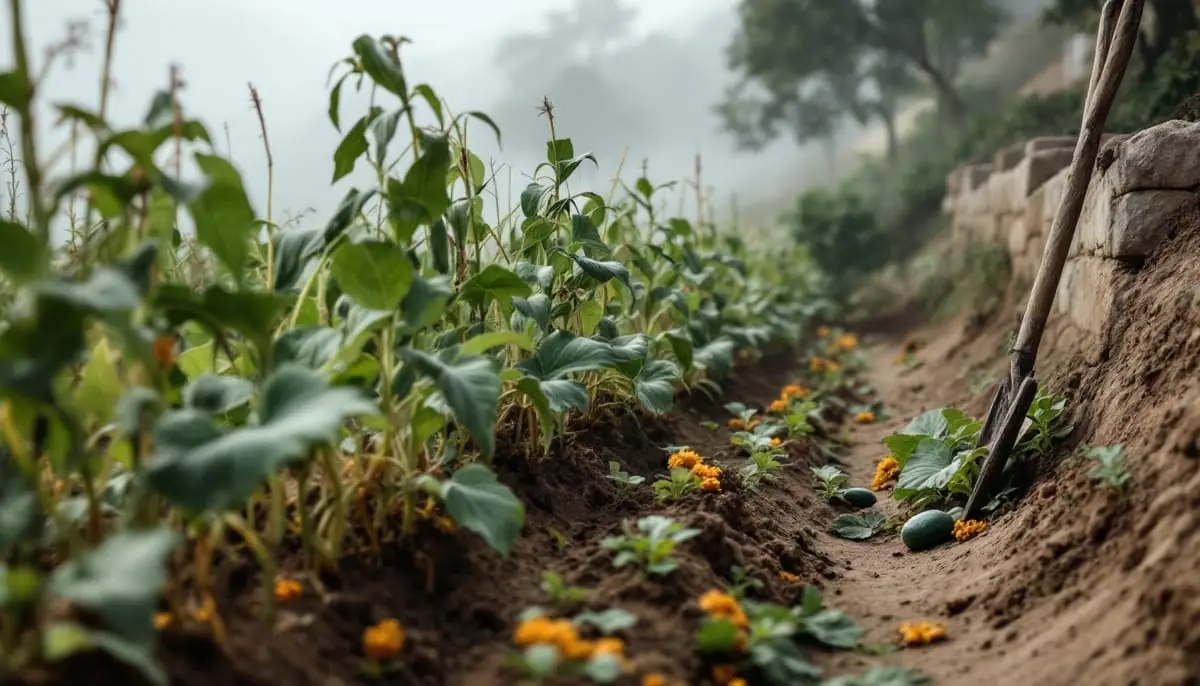
Bitter honey: Bt rootworms, GM pollen and the Mayan beekeepers
· 7 min read · by Marisol Ortega
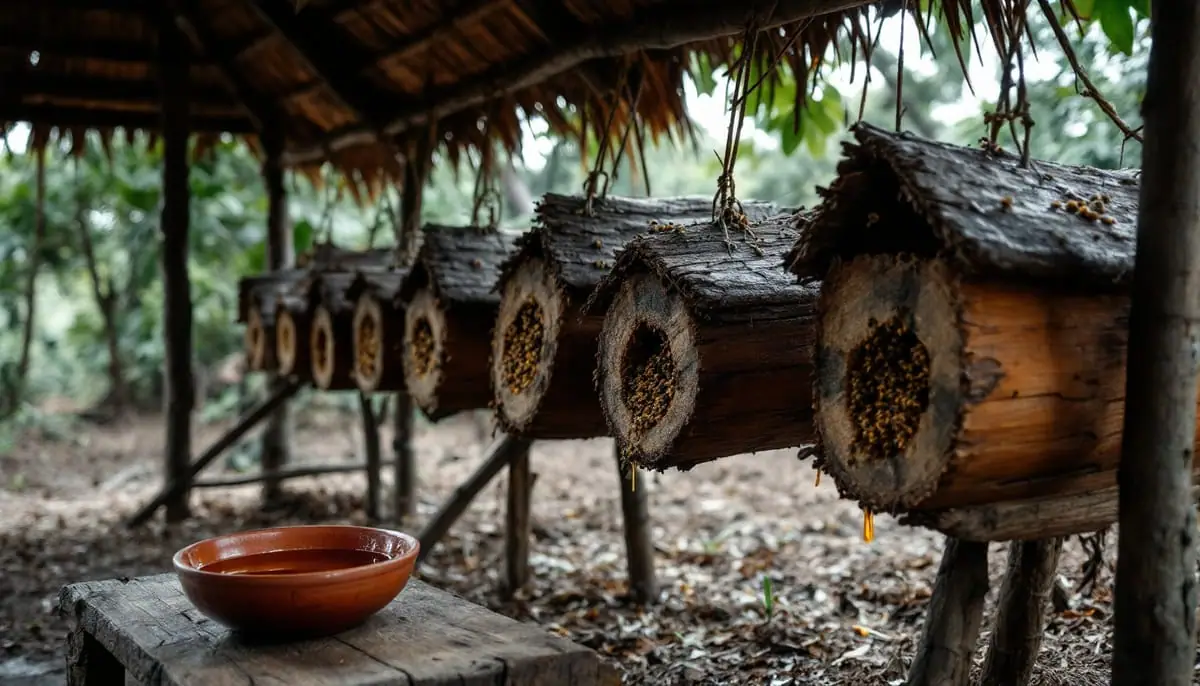
In the dry forests of the Yucatán peninsula, honey comes from two kinds of bee. One is the familiar honeybee, kept in wooden boxes and harvested for export by tens of thousands of families across Campeche, Yucatán and Quintana Roo. The other is the stingless Melipona, which Maya households have kept in hollowed logs for centuries and whose honey is prized as medicine. Both forage across kilometers of flowering forest. Both carry back whatever the countryside offers. When soybean fields began to replace parts of that forest, the honey started carrying new signals.
In 2011 two stories that looked unrelated landed within weeks of each other: a resistant beetle in Iowa and a court ruling in Luxembourg. A third began in the Yucatán the following year. Read together, they say a good deal about what happens when a crop technology meets the living things around it.
Strand one: a beetle that adapted
The western corn rootworm is a small beetle whose larvae chew maize roots, leaving plants that lean over or collapse in summer storms. For decades US farmers controlled it cheaply by rotating maize with soybeans: the larvae hatch in spring, find no maize roots and starve. In the 1990s a variant in Illinois and Indiana started laying eggs in soybean fields, which undid the rotation trick. Bt maize engineered to make a rootworm-killing protein, Cry3Bb1, arrived in 2003 as the high-tech fix.
In July 2011 Aaron Gassmann and colleagues at Iowa State University reported in PLoS ONE that rootworms from Iowa fields with severe root damage had evolved resistance to Cry3Bb1. The fields had been planted to Bt maize for several years running. Later work by the same group found that resistance to Cry3Bb1 came with reduced susceptibility to a second rootworm protein, and further problems were reported across the Corn Belt.
The companies called the problem local and pointed at farmers who had not planted the required refuges, the strips of non-Bt maize meant to keep susceptible insects in the population. They also promised new traits. The industry's response since has been to stack several Bt proteins in one plant and to add a trait, approved by US regulators in 2017, that kills rootworms through RNA interference. Agronomists, meanwhile, went back to recommending the oldest tool available: rotate your crops.
None of this is surprising to anyone who has watched the pesticide treadmill. Weeds did the same with glyphosate. After years of herbicide-tolerant crops sprayed with a single chemical, resistant weeds such as Palmer amaranth spread across US farmland, and seed companies answered with crops tolerant to older herbicides like dicamba and 2,4-D. Continuous maize, encouraged by the ethanol demand that also helped drive the biofuel boom of the 2000s, made both problems worse.
Strand two: the jar in Bavaria
The second story began with a hobby beekeeper in Bavaria whose hives sat a few hundred meters from fields where the regional government grew MON 810, a Bt maize, for research. Pollen from his hives was found to contain DNA from the GM maize. He went to court, and the case reached the Court of Justice of the European Union.
On 6 September 2011 the court ruled that pollen in honey is an ingredient, not an accidental contaminant, and that honey containing pollen from a GM crop is a food produced from GMOs. That meant it needed EU authorization as such before it could be sold, regardless of how small the amount. For beekeepers it was a vindication. For honey exporters in countries growing GM crops, from Argentina and Uruguay to Mexico, it was a new commercial risk overnight, because a laboratory result could now decide whether a consignment crossed the Atlantic.
Europe's lawmakers soon closed the door the court had opened. A 2014 amendment to the EU honey directive declared pollen a natural constituent of honey rather than an ingredient. GM labelling thresholds are calculated against each ingredient, so pollen would now be measured against the honey as a whole, and since pollen is a tiny fraction of any jar, GM pollen would almost never trigger a label. Beekeepers' groups saw it as a quiet reversal. The bees, of course, carried on foraging exactly as before.
Strand three: the forest and the soy
The third story played out in the Yucatán. Mexico is one of the world's big honey exporters, much of it shipped to Europe, and the peninsula produces a large share. For many Maya families honey is the cash crop that sits alongside the milpa, the plot of maize, beans and squash that feeds the household.
In June 2012 Mexico's agriculture ministry granted Monsanto a permit to plant glyphosate-tolerant GM soybeans commercially across several states, including Campeche, Yucatán and Quintana Roo. Beekeepers saw three threats at once. GM pollen in their honey could cost them European buyers. Glyphosate spraying over the peninsula's porous limestone, where water drains quickly into the aquifer that supplies wells and cenotes, could reach drinking water. And the soy expansion came with forest clearing for mechanized farming, which takes away the flowers bees depend on. Researchers working in Campeche later reported finding GM soy pollen in local honey.
Beekeepers and Maya communities went to court. Judges in Campeche and Yucatán suspended the permit in their states, and in November 2015 Mexico's Supreme Court ruled that the communities should have been consulted before the permit was granted, as Mexico's obligations on Indigenous rights require. Consultations followed and were fraught. In 2017 the plant health authority revoked the permit. One of the beekeepers who helped lead the challenge, Leydy Pech of Hopelchén in Campeche, received the Goldman Environmental Prize in 2020. Forest clearing in the area did not stop with the ruling, and the beekeepers' fight over land and water continues.
Mexico's maize turn
The soy case was a rehearsal for a bigger fight over maize, the crop that was domesticated in Mexico and that still carries much of its rural culture. The milestones:
- 2013. A class action brought by scientists, farmers and civil society groups led a federal judge to suspend new permits for planting GM maize. The suspension held for years through repeated appeals.
- December 2020. A presidential decree ordered the phase-out of glyphosate and of GM maize for human consumption.
- February 2023. A new decree replaced it, banning GM maize in dough and tortillas outright and instructing a gradual substitution in animal feed and industrial uses.
- 2023. The United States took Mexico to dispute settlement under the USMCA trade agreement, arguing that the measures were not based on science. Canada joined as a third party.
- December 2024. The USMCA panel ruled against Mexico, finding that the measures on imported GM maize were not supported by a scientific risk assessment. Mexico disagreed with the ruling but said it would comply, and in early 2025 it withdrew the challenged measures.
- March 2025. Mexico amended its constitution to protect native maize and prohibit the planting of GM maize in the country.
The constitutional change and the trade ruling deal with different things. The panel was about imports, and Mexico still buys large volumes of US yellow maize, most of it genetically modified, for feed and industry. The constitution is about what grows in Mexican soil. Whether the ban holds in practice will depend on enforcement, on what seed is already circulating and on how much pressure comes from the north. It is still a remarkable reversal for the country that hosted the FAO's 2010 biotechnology conference in Guadalajara just as its first GM maize field trials were being approved.
What the honey says
Bees are good witnesses because they cannot be told where to fly. A worker honeybee forages over distances that make the buffer strips in a GM permit look decorative. Whatever the regulators decide about coexistence, the pollen moves.
Taken together, the three strands point the same way. The rootworm showed that an insecticide built into every plant in every field soon produces insects that shrug it off. The Bavarian honey showed that the costs of contamination land on the neighbors, who have to prove their innocence in a lab. And the Maya beekeepers showed that the people carrying those costs can win, slowly and partially, when they insist on being consulted about the land they live on.
Fourteen years on, Mexico's honey still travels to Europe, its native maize now has constitutional protection, and the rootworm is still adapting in Iowa. The beekeepers of Campeche would say the lesson is simple enough to fit on a label: what you plant does not stay in your field.

Written by Marisol Ortega
Marisol covers seeds, smallholder farming and the rules that decide who may save, swap or sell them. She has spent a long time around maize fields and seed fairs and still thinks maize is the most political plant there is.