Handmade tile in an age of perfect copies, explained without the brochure
· 8 min read · by Samir Haddad
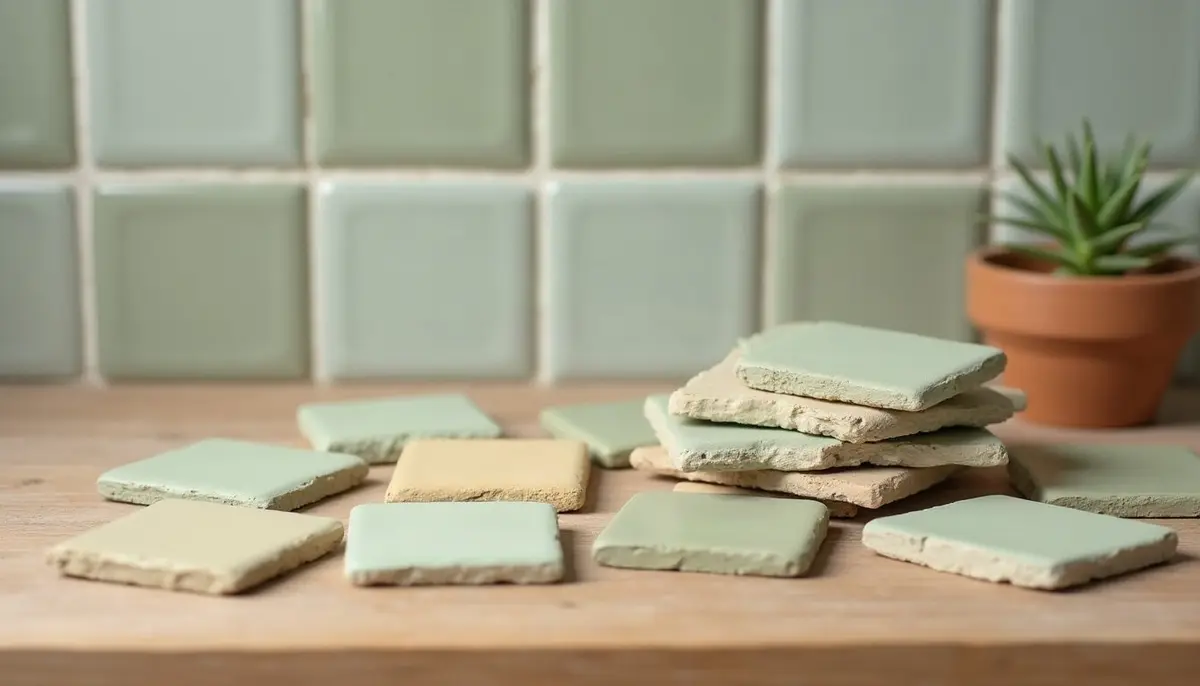
A box of small glazed squares sits open on a kitchen counter, waiting for the tiler. No two are quite alike: one is a shade greener, one has a pinhole in the glaze, one dips at a corner as if someone pressed a thumb into it. When someone types what is zellige into a search box, a tile seller's own explainer is a sensible first stop, and it settles the basics: these are handmade Moroccan tiles of glazed clay, and the unevenness is the whole point.
The more interesting question is the one that box raises for anyone who writes about technology. Most of the surfaces around us are made to be identical, and a large part of modern manufacturing is devoted to copying, at scale, things that used to be made by hand. So what does a handmade tile offer that a very good copy doesn't, who keeps the knowledge of how to make it, and what should a buyer check before the wall goes up? This piece works through those questions and ends with what to ask in writing before you order.
What the word actually covers
Zellige, in the strict sense, is glazed terracotta: local clay shaped into tiles, dried, fired, glazed and fired again, then often cut or chipped to its final shape by hand. Traditionally the small pieces were assembled into the geometric patterns found on walls and fountains across Morocco. Today the same material is also sold as plain squares and rectangles, laid in simple grids on kitchen backsplashes and shower walls.
A few neighboring terms are worth separating. Bejmat is a related Moroccan tile, usually a narrow rectangle shaped a little like a small brick, often used on floors. Terracotta is the fired clay body underneath, the same family of material as a plain garden pot. And "zellige look" or "zellige style" is a shop phrase for something different: a factory tile, usually ceramic or porcelain, made to resemble the handmade surface.
That last distinction matters. A label is a small piece of data, written by whoever is selling, and two products with nearly the same name can come from entirely different processes.
How it is made, and why it comes out uneven
The irregularity is not a decorative effect added at the end. It comes from the way the tile is made at every step. Clay is worked by hand and shaped in batches, so thickness varies slightly from piece to piece. Drying in open air means some tiles warp a little more than others. In the kiln, temperature is never perfectly even from the front of the load to the back, so glazes of the same recipe come out lighter or deeper, glossier or more matte, depending on where a tile sat.
Then there is the cutting. Where tiles are shaped by hand with a sharp hammer or chisel, the edges are slightly beveled and never perfectly straight. Small chips along the rim, pinholes, crazing (a fine web of cracks in the glaze surface) and color drift within a single batch are all normal features of the material rather than defects in the usual sense.
From a technology point of view, this is a process with a lot of human judgment in the loop and very little measurement. The maker decides when the clay is right, when a tile is dry enough, where the glaze has gone too thin. That judgment is the expertise, and it lives in people rather than software.
What a copy gets right, and what it leaves out
Factory tiles made to look handmade have become very convincing. Digital printing can lay a photographed glaze pattern onto a flat tile, and pressing can give the surface a gentle ripple. The honest case for these products is real: they are more uniform in size, they can be laid with tight joints, and buyers know in advance roughly what each box will look like.
What they leave out is harder to put in a spec sheet. A printed pattern repeats, and on a large wall the eye eventually finds the repeat. The depth of a real glaze, the way light pools in a dip at the corner of a tile, does not survive being turned into an image. And the variation in a handmade batch is genuinely random, which is exactly what a factory process is designed to eliminate.
Neither choice is wrong. A copy promises predictability; a handmade tile promises a surface shaped by hand that looks a little different at dusk than in the morning. The useful thing is to know which promise you are buying.
Who keeps the knowledge?
This is where tile turns out to be a technology story after all. Craft knowledge of this kind usually lives in workshops and families and passes on by apprenticeship: watching, copying, being corrected. It is not written into a database, it cannot be patented in any meaningful way, and it does not scale the way a factory line does.
When a traditional look is photographed, digitized and printed, something shifts. The pattern itself becomes a file, and the value moves toward whoever owns the printing line, the distribution and the shelf space. The original makers may keep their methods, but they lose control over the image of what they make. That is a pattern this site has followed in seeds, in farm data and in software: once a thing can be copied cheaply, the question of who decides what counts as the real one becomes a question of market power.
There is also a repair angle, which I think is underrated. What still works when the company disappears? With a handmade tile, a broken piece can be replaced by another from the same or a similar batch; it will not match exactly, but in a surface built on variation, a slight difference rarely stands out. With a discontinued factory line, the exact pattern may simply be gone, and a single cracked tile can leave you choosing between a visible patch and a new wall. A handful of spare tiles in a cupboard is a low-tech form of right to repair.
What you can check yourself
None of this requires expertise, only slowing down before the order, which is where problems are cheapest to catch.
- Look at real samples in daylight. Photographs flatten glaze and color. Several loose tiles held up against your own wall, at different times of day, tell you far more than a product page.
- Ask about batch variation. Handmade tiles vary between firings, so it helps to know whether your order will come from one batch and how much difference to expect.
- Order spares. Tilers commonly suggest buying extra for cuts and chipped pieces, and keeping a few back for future repairs is sensible with any material.
- Check the tiler's experience. Irregular tiles are laid differently from uniform ones: wider joints, more sorting and blending from several boxes, more care with edges. A tiler who has worked with handmade tile before will know this.
- Ask about sealing and cleaning. The clay body, and sometimes the glaze, can be porous. Your supplier and tiler can tell you whether sealing is recommended for your use, such as a shower wall versus a dry backsplash, and which cleaners to avoid.
Ask in writing
A tile wall is meant to last a long time, so it is worth having the answers on paper rather than remembering a conversation.
| Ask | Why it matters |
|---|---|
| Is this tile handmade, or a factory tile made to look handmade? | The two behave differently on the wall and are priced and described differently; the label alone may not say. |
| Will my whole order come from the same batch? | Glaze color shifts between firings, and mixing batches without blending can create visible bands. |
| How much extra should I order for cuts, chips and future repairs? | Handmade tiles may not be available in the identical shade later, so spares are your repair kit. |
| Is sealing recommended for where I plan to use it? | Porosity matters more in a shower or a kitchen splash zone than on a dry wall. |
| Which cleaning products should be avoided? | Some cleaners can dull glaze or stain the clay edges; knowing early saves a surface later. |
| What joint width and grout does the tiler plan to use, and why? | Irregular edges need a joint that suits them; a plan written down helps avoid a mismatch with your expectations. |
| What counts as a defect, and what counts as normal character? | With handmade tile, chips and color drift are expected; agreeing on that line in advance prevents disputes on delivery. |
The larger question
A wall of handmade tile is a small, almost private decision. But it sits on top of a familiar argument about technology: whether everything worth having should be made identical, scalable and copyable, and who benefits when it is. Factory copies are a genuine achievement, and for many rooms they are the right answer. Handmade tiles keep alive a kind of knowledge that lives in people and workshops rather than in files.
What I think a careful reader should take from this is not a rule about which to buy. It is a habit: ask what a product actually is, how it was made, and what you will be able to repair or replace in ten years. That habit works as well for a kitchen wall as it does for a phone or a seed packet, and it leaves the decision where it belongs, with the person who has to live with it.

Written by Samir Haddad
Samir writes about technology and society (artificial intelligence, data, nanomaterials and digital farming) and about how new tools get governed, or not, once they leave the lab.