Geeks start the week: what synthetic biology's 2007 promises delivered
· 8 min read · by Samir Haddad
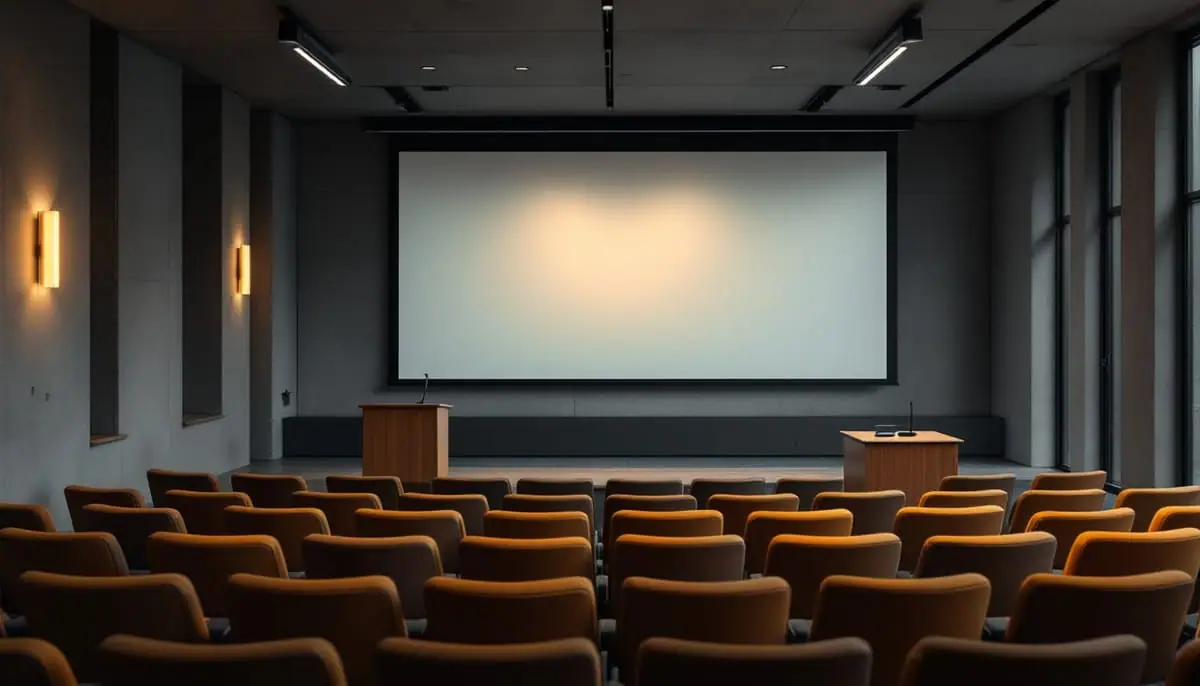
The opening day of Synthetic Biology 3.0, on a Sunday in June 2007 at ETH Zurich, belonged to the engineers. Accounts from the floor describe a run of quick, dense talks with circuit diagrams and equations on nearly every slide. Harvard's George Church raced through projects on minimal genomes, mirror-image molecules and new ways to read and write DNA. Others showed bacteria built to oscillate or count, borrowing the vocabulary of electronics. Harvard's Pam Silver described the field's founding bet: treat biology as a set of modular parts, then find out where that view breaks. Some of the clearest presentations came from undergraduates in iGEM, the student competition.
The policy sessions were scheduled for later in the week. Day one was about what the tools could do.
Reading those accounts from early 2026 is a useful exercise, because the promises were concrete enough to check. Some came true faster than almost anyone predicted. Some were quietly abandoned. One of the biggest developments of the following two decades was barely on the radar.
Reading DNA: the promise that overshot
In 2007 sequencing a human genome still cost millions of dollars. New "next-generation" machines, which read millions of short DNA fragments in parallel, were just reaching the market, and Church's lab was among those that had developed early versions of the approach.
What followed was one of the steepest cost declines in any technology. US National Human Genome Research Institute figures show the cost per genome falling sharply from 2008 onward, passing below $10,000 around the start of the 2010s. By the mid-2020s a human genome could be sequenced for a few hundred dollars on high-throughput machines.
The consequences reached well beyond synthetic biology: routine genetic testing in clinics, genomic surveillance of pathogens during the COVID-19 pandemic, large biobanks, ancient DNA research. If anything, the 2007 enthusiasts underestimated how far reading would go.
Writing DNA: cheaper, but slower
Synthesis was supposed to follow the same curve. It did fall in price: making a gene to order became a routine purchase for labs, and new companies used chip-based and enzymatic methods to drive costs down further. But writing never matched reading's collapse in cost. Long, accurate pieces of DNA are still harder and more expensive to build than to read, and assembling whole genomes remains a specialist undertaking.
That asymmetry shaped the field. Researchers who expected to design and print organisms wholesale ended up, for the most part, editing existing ones instead.
Building genomes: done, slowly and narrowly
Minimal and synthetic genomes were among the headline ambitions in Zurich, and they were achieved, though over a longer timescale and with more modest results than the rhetoric suggested.
- In 2010 the J. Craig Venter Institute reported a bacterium running on a chemically synthesized genome, an episode covered in our piece on Synthia and the race to a synthetic cell. In 2016 the same group described a pared-down version with just under 500 genes, many of whose functions were still unknown.
- In 2009 Church's lab published MAGE, a method for making many targeted changes across a bacterial genome at once. In 2013 a team built on it to recode E. coli by swapping every instance of one stop codon. In 2019 researchers at the MRC Laboratory of Molecular Biology in Cambridge reported an E. coli with a fully synthetic, recoded genome using fewer codons than nature's standard set.
- The international Sc2.0 consortium spent more than a decade redesigning the genome of baker's yeast. By the end of 2023 it had reported synthetic versions of all sixteen chromosomes, with work to combine them into a single strain continuing.
Mirror-image biology, another of Church's 2007 interests, took an unexpected turn. In December 2024 a large group of scientists, some of whom had worked on mirror-image molecules, published a warning in Science that creating mirror-image bacteria could pose serious risks and should not be pursued. It was a rare case of researchers flagging a line before reaching it, and it echoed long-standing arguments about how synthetic biology should be governed.
Programming cells: the analogy that leaked
The bacterial oscillators and counters on show in 2007 came from a line of work that began in 2000, when two papers described a genetic toggle switch and an oscillating gene network called the repressilator. The idea was that cells could be programmed like circuits from interchangeable parts.
That analogy produced real results. By 2016 researchers had software that compiled simple logic designs into DNA sequences for bacteria, and engineered genetic circuits are now used in research and in some diagnostics and cell therapies.
But biology resisted standardization. Parts that worked in one strain or growth condition behaved differently in another. Circuits imposed a metabolic burden that cells evolved to escape. Noise, interference between components and the sheer context-dependence of living systems meant that "plug and play" stayed largely aspirational. The electronics vocabulary survives; the expectation that biology would become as predictable as electronics mostly does not.
iGEM, BioBricks and the DIY labs
The students who impressed observers in 2007 were part of the most durable success of that period. iGEM grew from a handful of teams in 2004 into a large international competition with hundreds of teams a year. It became an independent foundation in 2012 and moved its main event to Paris in 2022. Its standard parts registry, built around the BioBrick format promoted by the BioBricks Foundation from 2006, gave students a shared library to work with, even if the quality and documentation of parts varied widely.
The do-it-yourself biology movement took off shortly afterward. DIYbio.org started in 2008, and community labs such as Genspace in Brooklyn, which opened in 2010, offered courses and bench space to non-professionals. Fears that garage biohackers would produce something dangerous have not, so far, been borne out; community labs have mostly become places for education, art and small projects, often with their own safety rules. The bigger effect has been cultural: a generation of scientists who see biology as something you build, not just study.
CRISPR: the tool nobody presented
The single biggest change since 2007 was not on that Sunday's program, because it hadn't been invented. In 2012 Jennifer Doudna, Emmanuelle Charpentier and colleagues showed that the bacterial CRISPR-Cas9 system could be programmed to cut DNA at chosen sites. In early 2013 several groups, Church's among them, showed it worked in human cells.
CRISPR made precise genome editing cheap and widely accessible almost overnight. Doudna and Charpentier received the 2020 Nobel Prize in Chemistry. Base editing and prime editing, developed in 2016 and 2019, made more precise changes possible. In late 2023 regulators in the UK and US approved Casgevy, the first CRISPR-based therapy, for sickle cell disease. Edited crops and animals followed, along with governance fights over gene drives and, in 2018, the scandal of gene-edited babies in China.
Synthetic biology's 2007 vision was largely about building from scratch. CRISPR turned the field toward editing, which proved more practical.
Designing proteins: the promise that arrived by another road
In 2007 designing proteins from first principles was an active research area and a distant goal. It arrived largely through machine learning. In 2020 DeepMind's AlphaFold2 predicted protein structures with accuracy close to experimental methods at the CASP14 assessment. David Baker's lab at the University of Washington, which had spent decades on computational design, moved quickly to generative methods that design new proteins to order.
In October 2024 the Nobel Prize in Chemistry went half to Baker for computational protein design and half jointly to Demis Hassabis and John Jumper for protein structure prediction. That recognition would have seemed far-fetched in a Zurich lecture hall in 2007.
It also renewed biosecurity worries: if AI can help design proteins, could it help design harmful ones? That concern now shapes debates over DNA synthesis screening.
A scorecard
| Promise heard in 2007 | What happened by early 2026 | Verdict |
|---|---|---|
| Reading DNA becomes cheap and routine | Human genomes for a few hundred dollars | Right, beyond expectations |
| Writing DNA follows reading's cost curve | Cheaper, but far less dramatically; long constructs still hard | Partly right |
| Cells programmed like circuits from standard parts | Working circuits, but context dependence limits plug-and-play | Overstated |
| Minimal and synthetic genomes | Synthetic bacterial genome (2010), recoded E. coli, synthetic yeast chromosomes | Right, slower and narrower |
| Engineered microbes replace oil | Most biofuel ventures folded or pivoted to chemicals and ingredients | Wrong so far |
| Students and amateurs join in | iGEM at large scale; community labs worldwide | Right, with fewer surprises |
| Design biology from first principles | Arrived via machine learning rather than physics | Right by another route |
The biofuel row deserves a word. Several companies with big plans in 2007 (Amyris, LS9, Codon Devices) later folded, were sold or changed direction; Amyris filed for bankruptcy in 2023. The economics of competing with petroleum and with crops proved much tougher than projected. Industrial synthetic biology found its footing instead in higher-value products: pharmaceuticals, flavors and fragrances, cosmetic ingredients, enzymes.
What the speakers got right
The overall verdict is more generous than skeptics in 2007 might have expected. The tools did get faster, cheaper and more powerful, often dramatically. What the speakers misjudged was mostly the shape of the progress: editing over building, learning from data over designing from principles, high-value niches over commodity fuels.
What day one in Zurich left out was the question the critics kept asking that week: who would own these tools, and who would decide how they were used? The engineers were right that the technology would arrive. They had less to say about the institutions it would arrive into, and those questions remain open.

Written by Samir Haddad
Samir writes about technology and society (artificial intelligence, data, nanomaterials and digital farming) and about how new tools get governed, or not, once they leave the lab.