Books about bees: six worth reading, from wild bees to a first hive
· 8 min read · by Henrik Aalto
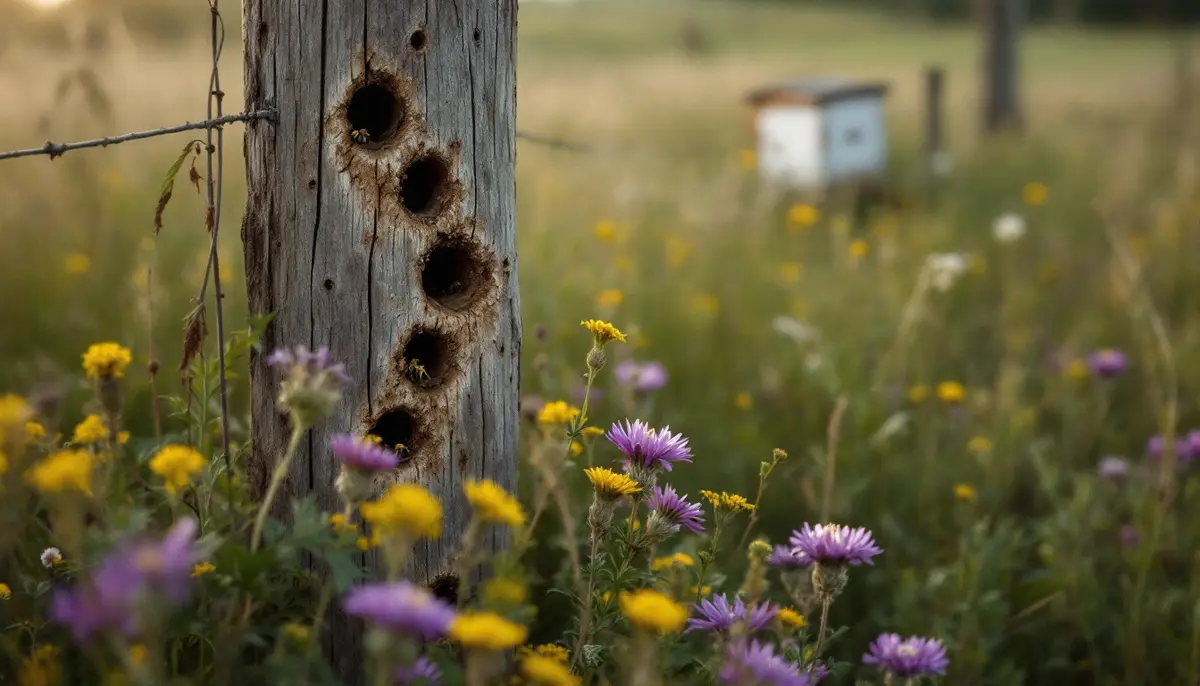
The right book about bees depends on which bees you mean. To get to know the wild bees nesting in your lawn and woodpile, start with The Bees in Your Backyard. For a good story with real science in it, read Dave Goulson's A Sting in the Tale, which also explains, better than most, why some bees are disappearing. If you are planning a first hive, get Beekeeping For Dummies before you spend anything on equipment.
Most bee books are about one insect. The western honeybee is a single species out of more than 20,000 described worldwide, and in the Americas it is an immigrant, shipped over by European settlers in the 1600s. The United States and Canada have roughly 4,000 native species. Most of them live alone, most nest in the ground, and none of them makes honey for anyone's breakfast. The six books below try to give both kinds their due, in three groups: watching bees, keeping them, and losing them.
How we chose
The six were picked for how easily a non-specialist can follow or use them, for a spread of viewpoints from the field biologist to the hobby beekeeper, and for how widely they are read and reviewed.
Watching bees
The Bees in Your Backyard by Joseph S. Wilson and Olivia Messinger Carril. Two bee biologists wrote this guide to the bees of the United States and Canada, almost none of which ever lives in a hive. The opening chapters cover bee biology, nesting habits and the features that separate one group from another, and the rest of the book works through the bee families and their genera with colour photographs. That is the honest level for a field guide, since many bees can only be named to species with a specimen and a microscope. It suits gardeners and naturalists, and anyone who has noticed that the "bees" on their flowers come in a dozen sizes. It covers North America only.
Telling bees apart often comes down to luggage. Bees descend from hunting wasps that switched to a diet of pollen, and they solved the problem of carrying it home in different ways: packed into baskets on the hind legs, as honeybees and bumblebees do, brushed into stiff hairs under the belly, as leafcutter and mason bees do, or swallowed and carried internally, as the small yellow-faced bees do. Once you know where to look, a blur on a flower becomes a family.
Honeybee Democracy by Thomas D. Seeley. In spring a strong honeybee colony may split: the old queen leaves with a large share of the workers, and the swarm hangs from a branch while it decides where to live. Seeley, a biologist at Cornell, spent decades working out how that decision gets made, much of it with nest boxes on Appledore Island off the coast of Maine, where the lack of trees meant his boxes had little natural competition. A few hundred scouts inspect cavities, advertise good ones with longer waggle dances, and recruit other scouts, until enough of them gather at one site at the same time to set the whole swarm in motion. He builds on the work of Martin Lindauer, who first followed swarm scouts in the 1950s, and closes with lessons for human committees that are charming and a little optimistic. It suits readers who like to see how an experiment is designed, not only what it found.
Keeping bees
Beekeeping is older and more varied than the white box suggests. In the Yucatán, Maya households have kept stingless Melipona bees in hollow logs for centuries, next to the honeybee hives that supply export honey, and both kinds of forager carry home pollen from whatever grows nearby, as our account of GM soy pollen and the Mayan beekeepers describes. The two books here assume the more familiar setup: honeybees in a wooden hive in a North American or European backyard.
Beekeeping For Dummies by Howland Blackiston. The yellow-and-black format puts some readers off, which is their loss. Blackiston, a longtime backyard beekeeper, takes the decisions a beginner faces in roughly the order they arrive: where to put the hive, which equipment to buy, how to install a package of bees, what to look for on an inspection and how to harvest. The book has gone through several editions, and recent ones cover Varroa mites, the parasite most beekeepers now treat as their central problem, as well as hive designs other than the standard Langstroth box. It is written from a US perspective, so suppliers, seasons and rules lean American. Pair it with a local beekeeping club, because no book can tell you when the nectar flow starts in your county.
The Beekeeper's Bible by Richard A. Jones and Sharon Sweeney-Lynch. This is the other kind of beekeeping book: a large illustrated volume with as much history as husbandry. It covers the biology of the hive, beekeeping from antiquity to the modern frame hive and day-to-day hive care, then spends a long stretch on what to do with the results, from cooking with honey to making candles and cosmetics from wax. It makes a good gift and a good companion for the winter months when the hives stay closed. Its practical chapters are broad rather than step by step, though, so a beginner will want a dedicated manual alongside it and local advice on top.
Losing bees
Two different stories get filed under "the bees are dying", and it helps to separate them. Honeybees are livestock. Beekeepers in the United States and Europe have reported heavy winter losses since "colony collapse disorder" made headlines in 2006 and 2007, and Varroa mites and the viruses they spread are now usually ranked first among several causes. Yet the number of managed hives worldwide has grown over the past half century, because beekeepers split colonies and replace the ones they lose. Wild bees have no beekeeper.
The 2016 pollinator assessment by IPBES, the intergovernmental science-policy body for biodiversity, found that more than three quarters of the leading types of food crops depend to some extent on animal pollination. It reported declines in wild pollinators in northwestern Europe and North America, too little data to judge most other regions, and several pressures acting together: habitat loss, intensive farming and pesticides, disease, invasive species and climate change. In 2017 the rusty patched bumble bee became the first bee in the continental United States listed as endangered. The European Union restricted three neonicotinoid insecticides in 2013 and banned their outdoor use in 2018.
A Sting in the Tale by Dave Goulson. Goulson, a bumblebee researcher who founded the Bumblebee Conservation Trust, mixes the natural history of bumblebees with the story of one species Britain lost. The short-haired bumblebee vanished from Britain in the late twentieth century, but descendants of British queens shipped to New Zealand more than a century ago to pollinate red clover survived there, and the book follows the effort to bring the species home. In between come chapters on how a colony starts from a single queen in spring and why some species cope with modern farmland far better than others. Goulson is funny about fieldwork and blunt about agriculture. He later widened the argument to insects in general in Silent Earth.
Silent Spring by Rachel Carson. It is not a bee book, which is the point of including it. Carson's 1962 account of DDT and other synthetic pesticides moving through soil, water, insects and birds set the pattern for every later argument about chemicals and pollinators: approve a compound for one pest, spread it across whole regions, and study its effects on everything else afterwards. Some of her specific claims have been argued over since, but the structure of the case has hardly aged, and anyone following the neonicotinoid fight will recognise it. Our list of environmental books places it alongside Leopold and Kolbert.
Which bee book first?
| If you want... | Read |
|---|---|
| To identify the wild bees in your garden | The Bees in Your Backyard |
| A good story that teaches you bumblebee biology | A Sting in the Tale |
| To see how a colony reaches a decision | Honeybee Democracy |
| Step-by-step help with a first hive | Beekeeping For Dummies |
| A big illustrated book on hives, honey and wax | The Beekeeper's Bible |
| Where the pesticide argument began | Silent Spring |
Every book recommended on this blog, grouped by topic, sits on our bookshelf.
Questions people ask
What is the best book about bees for beginners?
It depends on what you want to do. For a general reader, A Sting in the Tale is the friendliest introduction to bee biology and decline. For someone who wants to identify bees outdoors in North America, The Bees in Your Backyard. For someone about to keep honeybees, Beekeeping For Dummies.
What should I read before getting honeybees?
A practical manual first, ideally over the winter before you start, and then a beginners' course if a beekeeping association near you runs one. Many towns and counties have rules on where hives can stand, so check those before ordering bees. Honeybee Democracy is optional, but it makes swarming, the event every new beekeeper dreads, a good deal less mysterious.
Are honeybees native to North America?
No. The western honeybee arrived with European settlers in the 1600s. The continent's native bees include bumblebees, mason bees, leafcutter bees, sweat bees and mining bees, and they pollinated its plants long before the first hive was unloaded. Some researchers argue that dense apiaries can compete with wild bees for flowers, though the evidence varies from place to place.

Written by Henrik Aalto
Henrik writes about genetic engineering, gene editing and synthetic biology: the science, the patents and the gap between a press release and a product. He reads the supplementary data so you do not have to.