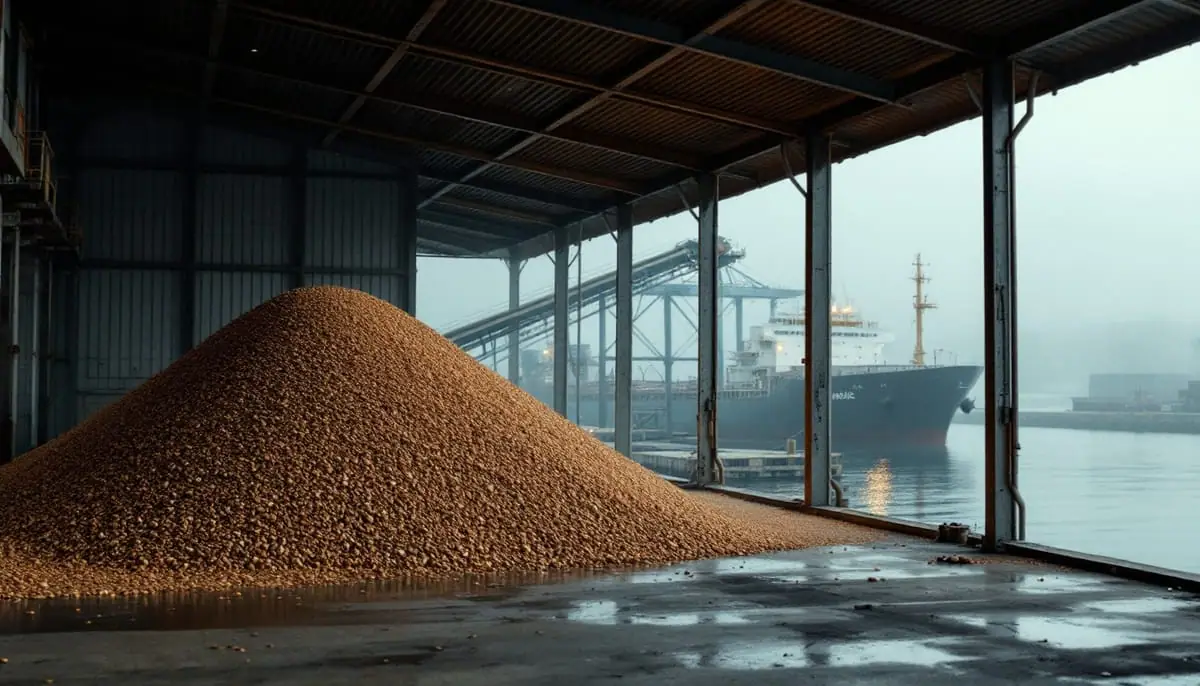
Climate technology transfer: for Northern business or Southern countries?
· 7 min read · by Iris Calloway
In the second week of the Copenhagen climate summit in December 2009, technology was the item officials liked to mention when asked whether anything was going well. The Danish presidency and the head of the UN climate secretariat, Yvo de Boer, both singled it out as one of the more advanced strands of the talks. Next to emission targets and money, it looked easy. Everyone agreed developing countries needed clean energy and adaptation technologies. Nobody was against helping them get them.
The ease was mostly on the surface. Draft texts on technology at Copenhagen shrank to a few thin pages and then swelled again overnight as the contested passages were stripped out and put back in. The argument underneath was about intellectual property, about who would design and run the new institutions, and about whether "transfer" meant handing over capability or opening new markets for companies that already had it. Those questions were never really answered. They were set aside, and much of what has happened since is the result.
A promise from 1992
The obligation is old. Article 4.5 of the UN Framework Convention on Climate Change, agreed in 1992, commits developed countries to "take all practicable steps to promote, facilitate and finance, as appropriate, the transfer of, or access to, environmentally sound technologies and know-how" to other parties, particularly developing ones. Article 4.7 goes further, making what developing countries do depend partly on how well rich countries deliver finance and technology.
For most of the following two decades, delivery meant reports, workshops and guidebooks. An Expert Group on Technology Transfer, set up in 2001, did useful work cataloguing barriers. Developing countries carried out "technology needs assessments", although critics pointed out that the guidance for them read in places like advice on attracting foreign investors rather than a method for working out what a country actually needed: grid extension, flood warnings, drought-tolerant irrigation, or something else entirely.
By 2009 a new institution looked like a cheap win. It gave negotiators something concrete to announce while committing nobody to specific money or concessions. Both camps could support a "technology mechanism" because each meant something different by it.
The fight underneath
The G77 and China, with India among the most vocal, treated climate technologies as close to a public good. Their proposals included compulsory licensing, pooling patents on climate technologies, excluding such patents in developing countries, joint research with shared rights, and a fund to buy out licences so that technologies could be used freely. They wanted plans driven by national priorities and new money to pay for them.
Developed countries, and the business groups lobbying them, wanted "enabling environments": a diplomatic phrase for investor-friendly law, including strong patent enforcement. They argued that most technology moves through trade and private investment, that patents are what pay for innovation in the first place, and that the existing rules at the World Trade Organization and the World Intellectual Property Organization were adequate. For the United States, any text that touched intellectual property was effectively a red line.
A third position got even less attention. Civil-society groups asked that any support system include an assessment of a technology's social and environmental effects before public money backed it, pointing to how first-generation biofuels had been promoted as climate-friendly before their effects on land and food prices were understood. That proposal did not make it into the drafts.
Copenhagen ended with an accord that the conference merely "took note of". One of its paragraphs promised a technology mechanism. The details came a year later.
Timeline: from promise to mechanism
- 1992 – The UNFCCC's Articles 4.5 and 4.7 make technology transfer a treaty obligation for developed countries.
- 2001 – At Marrakesh, parties adopt a framework on technology transfer and create the Expert Group on Technology Transfer.
- 2007 – The Bali Action Plan names technology one of the building blocks of a new agreement, alongside mitigation, adaptation and finance.
- 2008 – The Poznań strategic programme on technology transfer is set up, run through the Global Environment Facility.
- December 2009 – Copenhagen. The accord refers to a technology mechanism; the dispute over intellectual property stays unresolved.
- December 2010 – The Cancún Agreements create the Technology Mechanism, with a Technology Executive Committee for policy and a Climate Technology Centre and Network to deliver help. Intellectual property is not mentioned.
- 2012 – At Doha, parties pick UNEP, working with UNIDO and a consortium of partner institutions, to host the Climate Technology Centre and Network. It is based in Copenhagen.
- 2015 – Article 10 of the Paris Agreement sets a long-term vision for technology and places the Mechanism at the Agreement's service.
- 2018 – At Katowice, parties adopt the "technology framework" that Article 10 called for.
- 2022 – At Sharm el-Sheikh, the two bodies get their first joint work programme, for 2023–2027.
- 2023 – At Dubai, parties agree to set up a technology implementation programme, leaving its content to later talks.
- June 2024 – Bonn negotiations on that programme make little headway; the file moves to COP29 in Baku in November.
What the Mechanism does, and what it doesn't
The Technology Executive Committee is a body of twenty experts nominated by governments. It writes policy briefs and recommendations for the annual conferences. The Climate Technology Centre and Network answers requests from developing countries, which come through a "national designated entity" each government appoints. The help is technical: feasibility studies, policy design, early-warning systems, energy-efficiency programmes. The centre has relied heavily on voluntary donor contributions and has repeatedly said its budget falls short of demand.
Judged as a matchmaking and advisory service, it works in its niche. It does not license patents. It does not finance hardware at scale. It does not assess whether a technology is a good idea before promoting it. In the terms of 2009, the developed-country model largely won: a support structure for diffusion through markets, with the property questions left to the WTO and WIPO.
Article 10 and the absent word
Article 10 of the Paris Agreement is worth reading for what it leaves out. It speaks of a shared long-term vision on the importance of fully realising technology development and transfer. It makes accelerating, encouraging and enabling innovation an explicit aim. It promises support, including financial support, for developing countries. It never mentions intellectual property. The emphasis on innovation suited the countries where most climate research and development was done, and the day the Paris conference opened, about twenty governments launched Mission Innovation, pledging to double public clean-energy research budgets over five years.
Mid-2024: the map has flipped
The North-to-South picture that framed the Copenhagen talks no longer describes the industry. The International Energy Agency has reported that China accounts for more than 80 per cent of manufacturing capacity across the main stages of solar panel production, and it leads in batteries too. The cheapest panels being installed in Lagos or Lahore are not coming from Europe or the United States.
Rich countries now talk about technology in the language of supply security. The US Inflation Reduction Act of 2022 tied large subsidies to domestic manufacturing. The European Union adopted its Net-Zero Industry Act in 2024. In May 2024 Washington announced a steep tariff increase on Chinese electric vehicles, and in July the EU imposed provisional duties of its own. The governments that spent years telling developing countries to open their markets to climate technologies are now keeping some of those technologies out.
The intellectual property argument, meanwhile, resurfaced elsewhere. During the pandemic, India and South Africa proposed a broad waiver of patent rules for Covid-19 products at the WTO. What emerged in June 2022 was a narrower decision covering vaccines. Anyone who expected the patent system to bend for a global emergency got an answer.
Some resource-rich developing countries have stopped waiting for transfer and are using trade policy to pull value home. Indonesia banned nickel ore exports from 2020 to force processing onshore, and Zimbabwe banned exports of unprocessed lithium ore at the end of 2022. These are the "country-driven" strategies the G77 asked for in 2009, pursued outside the climate regime rather than through it. Whether they build lasting industrial capability or mostly attract foreign processors on new terms is an open question.
The pattern will be familiar to anyone who has followed seeds. Property rules decided in one forum shape what is possible everywhere else, whether that is the pressure on countries to adopt UPOV 91 or the consolidation of the seed and agrochemical industry. Climate technology has followed the same logic. The green-economy debate before the Rio+20 summit turned on the same question of who owns the tools.
For COP29, developing countries want the new finance goal to cover the cost of acquiring and building technologies, and they want the implementation programme to come with money rather than more workshops. Developed countries will want private finance to count. The hard question from Copenhagen remains: is transfer measured by how much equipment is sold to the South, or by how much capacity the South ends up owning? After fifteen years of mechanisms, frameworks and work programmes, the answer the system gives is still mostly the first.

Written by Iris Calloway
Iris follows climate negotiations, carbon markets and the growing list of proposals to engineer the climate itself, from solar geoengineering to ocean fertilisation. She is interested in who gets to decide, and who carries the risk.