From Durban to Baku: the long life of 'climate apartheid'
· 8 min read · by Iris Calloway
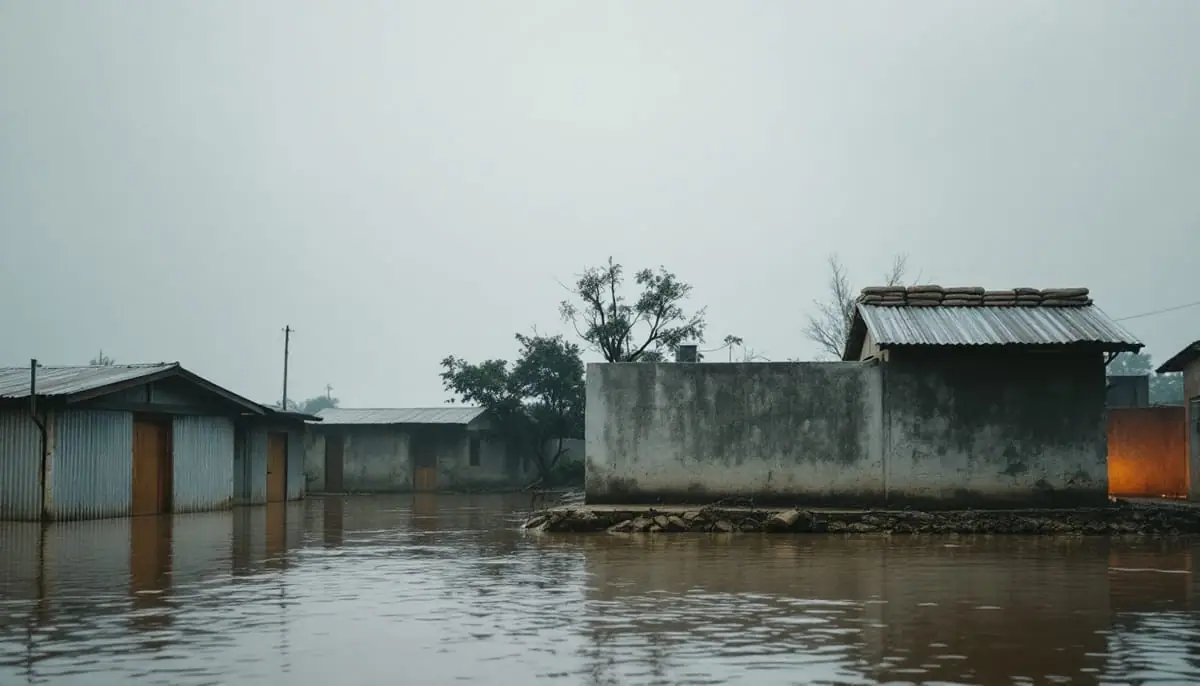
The Durban climate conference was due to end on Friday 9 December 2011. It ran on until the early hours of Sunday the 11th, and the deciding moment came on the plenary floor, where the EU's climate commissioner and India's environment minister huddled with negotiators over the legal status of an agreement that did not yet exist. They found words both could accept, and the gavel came down.
Outside the hall the verdict was harsher. Climate justice networks and African campaigners called the result climate apartheid: rules that protected a wealthy minority's way of life and left everyone else, starting with the poorest countries, to absorb the damage. In South Africa, seventeen years after the end of the system that gave the word its meaning, nobody used it by accident.
Fourteen years on, the denounced deal has become the Paris Agreement, and the phrase has outlived most slogans of its era. What did Durban decide, why did it draw that charge, and how does the charge look in May 2025?
What Durban decided
Of a thick stack of decisions, five mattered most.
| Decision | Agreed in December 2011 | What became of it |
|---|---|---|
| Durban Platform for Enhanced Action | Talks on "a protocol, another legal instrument or an agreed outcome with legal force" applicable to all, done by 2015, in effect from 2020 | The Paris Agreement, December 2015 |
| Kyoto Protocol | A second commitment period agreed in principle from 1 January 2013; end date and targets left for 2012 | The Doha Amendment (2013-2020), in force only on 31 December 2020, the period's last day |
| Green Climate Fund | Governing instrument approved: a 24-seat board split evenly between developed and developing countries; World Bank as interim trustee | Based in Songdo, South Korea; first projects approved in late 2015 |
| Markets | A "new market-based mechanism" defined; carbon capture and storage made eligible for offset credits; market finance for forests left open | Overtaken by Article 6 of the Paris Agreement, its rules completed in Baku in 2024 |
| Technology | Procedures for the Technology Executive Committee; search opened for a host for a technology centre | UNEP chosen in 2012 to host the Climate Technology Centre and Network |
The Durban Platform was the real change. Since 1992 the climate convention had split the world into Annex I, the industrialised countries, and everyone else. Only the first group took on binding cuts under Kyoto. "Applicable to all" signalled the end of that firewall, and the decision mentioned neither equity nor common but differentiated responsibilities by name. China, India and the other big emerging economies would be inside the next agreement, on terms still to be written.
The Kyoto extension was thinner than it sounded. The United States had never ratified it. Japan and Russia had refused new targets, and New Zealand later stayed out too. On 12 December, the day after the summit closed, Canada announced it was leaving altogether. The countries that eventually signed up for a second period covered well under a fifth of global emissions.
Why the word was apartheid
The critics' case had four parts.
Time. The Durban Platform decision itself noted with grave concern the gap between countries' pledges and the pathways needed to hold warming below 2°C or 1.5°C. Yet the new agreement would apply only from 2020. Campaigners read that as a lost decade and warming far above 2°C, more in the hotter parts of Africa.
Burden. With every country to act under one legal roof and the money for poorer ones still a promise, responsibility was drifting from those who had caused most of the problem to those who had caused least.
Means. Durban kept carbon markets alive and widened them on paper: the new mechanism, a door left open to selling forest carbon, a first discussion of agriculture that campaigners feared would end in soil carbon credits, and offset credits for carbon capture and storage. Critics saw rich emitters buying their way out of cuts with projects in poorer countries, the model at the heart of the argument over the "green economy".
Control. The World Bank, which many developing-country governments distrusted, would hold the Green Climate Fund's money, at least for a while. The technology bodies moved ahead without touching patents, the question that had stalled the technology-transfer talks at Copenhagen two years earlier.
Was it fair?
The analogy has obvious limits. Apartheid was a legal order of racial classification enforced by a state; climate inequality has no single author and no statute book. Nor was the outcome simply imposed on the poor. The EU had built its strategy around an alliance with the least developed countries and small island states, which wanted a roadmap because Kyoto without the largest emitters could not protect them. The fiercest late resistance came from India, not from the most vulnerable.
But the critics were not mainly alleging intent. They were describing a structure: decisions taken where emissions and money were concentrated, with consequences landing where neither was. That claim can be checked against what happened next.
From slogan to UN report
The phrase predates Durban. The UN Development Programme's Human Development Report 2007/2008, devoted to climate change, carried a contribution from Archbishop Desmond Tutu warning against "adaptation apartheid": rich countries building defences while poor ones coped alone.
In June 2019 it reached the UN Human Rights Council. Philip Alston, then UN Special Rapporteur on extreme poverty and human rights, presented a report on climate change and poverty warning of a climate apartheid scenario, in which the wealthy pay to escape overheating, hunger and conflict while everyone else is left to suffer. He cited estimates that developing countries would bear around three-quarters or more of the costs of climate change, and that it could push more than 100 million additional people into poverty by 2030. One example was New York after Hurricane Sandy in 2012: low-income residents lost power and healthcare while a large investment bank's headquarters was protected by its own sandbags and generators. He also warned that over-reliance on the private sector would make that scenario more likely.
A protest slogan had become UN language, and it now turns up in academic journals and in arguments over heat, migration and insurance. The same logic runs through the solar geoengineering debate, where those who can afford to run experiments are rarely those who would live with the side effects.
A short timeline
- 2007: UNDP's climate report carries Tutu's warning against "adaptation apartheid".
- December 2011: Durban launches the talks that lead to Paris; critics call it climate apartheid.
- June 2012: The Rio+20 summit endorses the green economy as one tool for sustainable development.
- December 2015: Paris Agreement adopted. Oxfam estimates the richest tenth of humanity accounts for about half of consumption emissions, the poorest half for about a tenth.
- June 2019: Alston's report to the Human Rights Council.
- 2022: Floods leave around a third of Pakistan, a country with less than 1 per cent of global emissions, under water. In November, governments agree to create a loss and damage fund.
- November 2024: COP29 in Baku agrees a new finance goal.
The ledger in May 2025
Some things went better than the 2011 critics feared. The Paris Agreement kept differentiation in a softer form, "in the light of different national circumstances", added the 1.5°C goal the most vulnerable countries fought for, and gave loss and damage its own article. Renewable power became far cheaper than most 2011 forecasts assumed.
The distribution of harm and protection has moved much less.
Heat. In January 2025 the World Meteorological Organization confirmed 2024 as the warmest year on record and probably the first calendar year more than 1.5°C above pre-industrial levels. UNEP's Emissions Gap Report of October 2024 found current policies pointing to warming of up to 3.1°C this century.
Adaptation. At Glasgow in 2021, developed countries were urged to at least double adaptation finance from 2019 levels by 2025. UNEP's adaptation gap reports put developing countries' needs in the hundreds of billions of dollars a year this decade, many times the international public money actually flowing, which is in the tens of billions. Basic protection is uneven too: when the UN launched Early Warnings for All in 2022, aiming to cover everyone by the end of 2027, about half the world's countries lacked adequate multi-hazard warning systems.
Money. The US$100 billion a year promised at Copenhagen for 2020 was, by the OECD's count, first reached in 2022, two years late and with a large share in loans. In Baku in November 2024 governments agreed that developed countries should take the lead in mobilising at least US$300 billion a year by 2035, from a wide variety of sources, public and private, and called on all actors to scale finance for developing countries up to $1.3 trillion a year. After a decade of inflation, $300 billion will buy a good deal less than it sounds. Developing countries had asked for far more public money. India's negotiator objected from the floor minutes after the gavel fell; the least developed countries and small island states had walked out of a consultation the day before.
Losses. The loss and damage fund began work after the Dubai summit of 2023 with pledges well under a billion dollars, against a single Pakistani flood season that caused more than $30 billion in damage and losses.
Exits. The United States notified its second withdrawal from the Paris Agreement in January 2025, effective a year later. Of the $3 billion it pledged to the Green Climate Fund in 2014, it paid $1 billion before payments stopped in 2017.
None of this proves that anyone in Durban set out to build a two-tier world. It does suggest the critics picked the right variable. The agreements written since 2011 have been precise about who must act and vague about who must pay. Wealthy places buy sea walls, cooling and insurance on their own account. Poorer ones apply to funds, wait for board approvals and borrow the difference.
The next round is COP30 in Belém in November 2025, where governments are meant to set out a roadmap towards the $1.3 trillion figure and present new national targets, most of which missed their February deadline. The test will be less any headline number than the details the Durban critics watched: who sits on the boards, who can draw on the money directly, whether it comes as grants or loans, and how long a flooded country has to wait.
Written by Iris Calloway
Iris follows climate negotiations, carbon markets and the growing list of proposals to engineer the climate itself, from solar geoengineering to ocean fertilisation. She is interested in who gets to decide, and who carries the risk.