The FAO, biotech and who gets to speak for farmers
· 7 min read · by Marisol Ortega
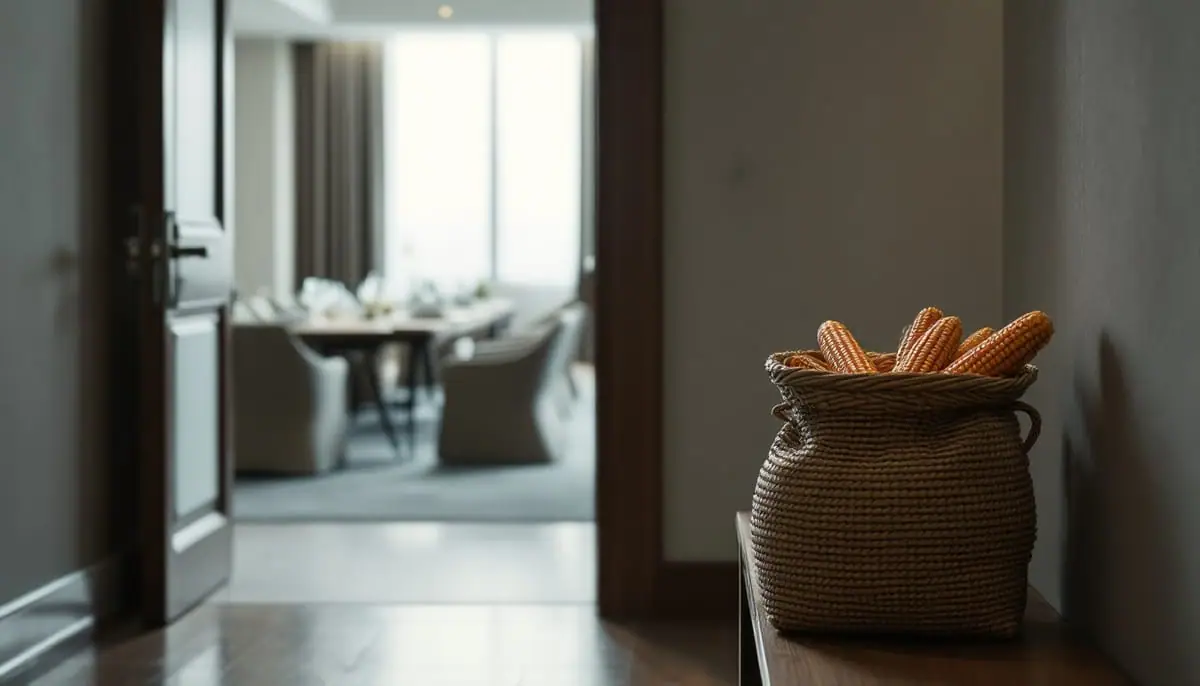
In the first days of March 2010, delegates gathered at a hotel in Guadalajara, Mexico, for a conference with one of those titles that only an intergovernmental agency could love: Agricultural Biotechnologies in Developing Countries: Options and Opportunities in Crops, Forestry, Livestock, Fisheries and Agro-industry to Face the Challenges of Food Insecurity and Climate Change. The Food and Agriculture Organization of the United Nations shortened it to ABDC-10. Elsewhere in the city, peasant and Indigenous organizations held a hearing of their own, on the contamination of Mexican maize by transgenes.
The two meetings are a useful way into a question that reaches well beyond 2010. When a UN agency sits down to discuss farming technology, who is in the room, and who gets to say what farmers need?
2004: a report that set the tone
The FAO's relationship with GM crops was already contentious. Its flagship report The State of Food and Agriculture 2003–04 was devoted to agricultural biotechnology and asked whether it could meet the needs of the poor. Its cautiously hopeful answer drew an open letter from hundreds of farmers' organizations and civil society groups, who accused the agency of siding with industry and ignoring the farmers it was meant to serve. The FAO defended the report as a balanced review of the evidence. Neither side moved much, and the argument set the terms for what came next.
March 2010: Guadalajara
ABDC-10 ran from 1 to 4 March 2010, hosted by the Mexican government, with partners that included the World Bank and the CGIAR network of agricultural research centers. Its scope was huge: crops, trees, livestock, fish and food processing. The "biotechnologies" on the table ranged from tissue culture and artificial insemination through marker-assisted breeding to genetic modification.
The criticism came on three fronts.
Who was in the room. This was mostly a meeting of governments, scientists and institutions, by invitation, in a secured venue. The farmers, fishers and forest peoples whose food security was the stated subject had little real presence. For an agency founded to end hunger, critics argued, holding a closed discussion about the poor without the poor was a choice, not an oversight.
The timing. Mexico had authorized its first experimental plantings of GM maize in late 2009, in the crop's center of origin, after years of a de facto moratorium. A UN biotechnology conference on Mexican soil a few months later looked to many like international cover for a contested decision at home. Critics argued that the FAO, which hosts the international treaty on crop genetic resources, should have used the moment to stand up for maize diversity.
The framing. By grouping everything from homemade yogurt to herbicide-tolerant soybeans under the one word "biotechnology", the conference papers made it harder to argue about the specific technologies people were actually worried about. And by presenting technology as the main answer to hunger, they stepped around the questions of who owns it, who patents the seed and who controls the market. By 2010 a small number of companies controlled most of the world's commercial seed and agrochemical sales, a concentration that the ranking of the top ten seed companies from 2007 onward lays out. In the background documents, critics noted, intellectual property appeared mostly as something developing countries needed options to comply with.
The FAO's answer was that low-cost biotechnologies have a lot to offer small producers, and that developing countries deserve information and choices rather than a blanket no. That is fair as far as it goes. Tissue culture to produce clean cassava or banana planting material has helped plenty of small farmers. The trouble was that a fair point was being used to carry an unfair frame.
Meanwhile, Mexican groups including the Network in Defense of Maize and La Vía Campesina ran their public hearing on GM maize contamination, with testimony from farmers, Indigenous communities and scientists. The record built there fed into years of further documentation and campaigning.
2009–2010: a different door opens
In those same years the FAO's world opened up in another direction. After the 2007–2008 food price crisis, the Committee on World Food Security, hosted at FAO headquarters in Rome, was reformed in 2009 to give civil society and Indigenous peoples' organizations a formal, self-organized place in its work through a civil society mechanism. Small-scale producers' organizations were given a defined role. It was not power, but it was a door, and peasant movements walked through it.
2014–2019: agroecology arrives in Rome
The larger shift came under José Graziano da Silva, director-general from 2012. In September 2014 the FAO held its first International Symposium on Agroecology for Food Security and Nutrition in Rome. For an institution long tied to the input-heavy Green Revolution, that was a notable step. Regional meetings followed in 2015 and 2016 in Latin America, Africa, Asia and Europe. A second international symposium in April 2018 launched a Scaling Up Agroecology Initiative, and in December 2019 the FAO Council approved the "10 Elements of Agroecology" to guide the organization's work. That same year the High Level Panel of Experts that advises the Committee on World Food Security published a major report on agroecological and other innovative approaches.
Peasant movements did not simply celebrate. Many worried that agroecology would be stripped of its political core, the questions of land, seed and markets, and shrunk into a menu of low-input techniques that could sit happily alongside anything. The phrase "and other innovative approaches" was itself read as a compromise that left space for industry's preferred technologies. Still, the change in tone was real, and farmers who had spent decades being told to modernize heard the FAO describe their own methods as part of the future.
2020: the CropLife letter
Then the pendulum swung back. Qu Dongyu took over as director-general in August 2019. In October 2020 the FAO announced a letter of intent with CropLife International, the global trade association of pesticide and plant biotechnology companies, to explore closer cooperation. Hundreds of civil society organizations and many researchers wrote asking the FAO to drop it, and the UN special rapporteur on the right to food was among those raising concerns. Critics pointed out that the FAO publishes, with the World Health Organization, the international code of conduct on pesticide management and works on reducing the use of highly hazardous pesticides, and asked how that sat with a formal embrace of the companies that sell them. The FAO replied that a letter of intent is not a partnership agreement, and that engaging with the private sector is part of its mandate.
The UN Food Systems Summit of September 2021 sharpened the same argument on a bigger stage. The civil society mechanism of the Committee on World Food Security and many farmers' movements stayed away and organized a counter-mobilization, arguing that the summit gave corporations and large philanthropies an outsized role and bypassed the one UN food body where small producers had a guaranteed voice.
2025: who speaks for farmers?
Fifteen years after Guadalajara, the FAO is a more plural place. Agroecology has an official home there. Farmers' organizations have a formal seat in the food security committee. Its documents talk about small-scale producers in ways that would have been unusual in 2004.
But the underlying contest has not gone away. It has moved. The question now is who gets treated as the voice of farmers. On one side are peasant movements such as La Vía Campesina, Indigenous peoples' organizations and fisherfolk networks, which speak for people producing much of the world's food on small plots and are often skeptical of the technologies on offer. On the other are commodity associations, large farm federations and industry bodies, which tend to speak for farms that already buy seed and chemicals and which are often more welcome at partnership meetings. Both are farmers' voices. They want very different things, and in rooms where seats are by invitation, the second group usually gets more chairs.
Mexico shows how much the answer matters. The country that hosted ABDC-10 while opening its fields to GM maize trials has since gone the other way. In 2023 it decreed that GM maize could not be used for tortillas; a USMCA trade panel ruled against those import restrictions in December 2024; and in March 2025 Mexico wrote a ban on planting GM maize into its constitution. That turn did not come out of a technical conference. It came from two decades of pressure by farmers, scientists and consumers, most of whom were never invited to Guadalajara. Seed law tells a similar story: the fights over UPOV 91 were won or lost on who managed to be heard. And with new genomic techniques now being offered to developing countries as the next answer to hunger, the FAO's guest list is going to matter again.
If a UN agency wants to know what farmers need, the most reliable method is still the oldest one. Ask farmers, and let them choose who answers.

Written by Marisol Ortega
Marisol covers seeds, smallholder farming and the rules that decide who may save, swap or sell them. She has spent a long time around maize fields and seed fairs and still thinks maize is the most political plant there is.