What is regenerative agriculture? The practices, the promises and the fight over the word
· 9 min read · by Marisol Ortega
Book links may earn us a commission. As an Amazon Associate I earn from qualifying purchases.
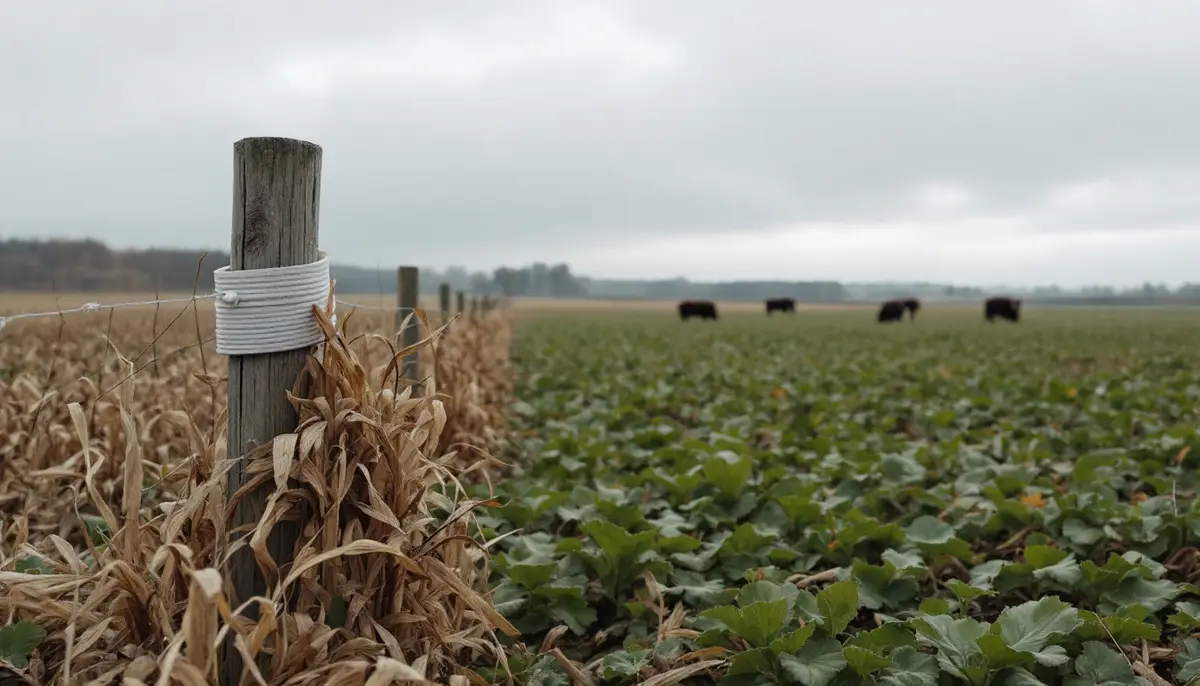
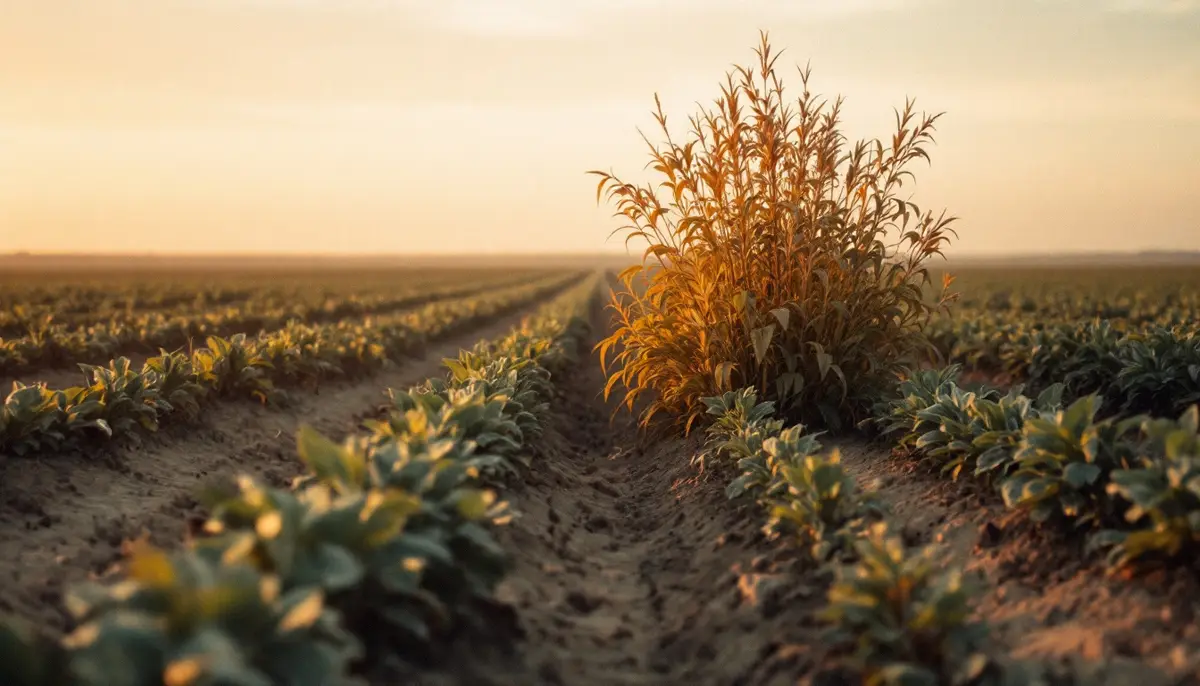
Regenerative agriculture is farming that tries to leave the soil, and the land around it, in better shape each year rather than simply slowing the damage. In practice it usually means disturbing the soil as little as possible, keeping it covered, keeping living roots in the ground for as much of the year as possible, growing a wider mix of crops, and bringing grazing animals back onto cropland.
There is no single agreed definition. Some people define regenerative agriculture by those practices; others define it by results, such as more organic matter in the soil, rain that soaks in instead of running off, more insects and birds, and a farm that makes a living. Food companies now print the word on packaging and in climate plans, often without saying which meaning they have in mind. Most of the argument about regenerative farming lives in that gap.
Where the word came from
The term goes back at least to the 1980s, when the Rodale Institute in Pennsylvania used it to describe farming that improves the resources it depends on instead of using them up. For a long time it stayed a niche word among organic researchers.
It spread in the 2010s, carried less by scientists than by farmers and ranchers who had changed how they worked and could show the difference in their soil. One of the best known is Gabe Brown, who farms near Bismarck, North Dakota. After a run of failed crops in the late 1990s left him short of money for inputs, he stopped tilling, planted cover crop mixes and brought cattle onto his fields. His book Dirt to Soil (Amazon (book)) tells that story and lays out the principles he arrived at, and it became a kind of field manual for the movement.
The core practices
Most lists of regenerative principles look something like this. The US Natural Resources Conservation Service lists four soil health principles; Brown and others add livestock, and some add a sixth, which is simply to fit everything to the local context.
Disturb the soil less
Plowing and heavy tillage break apart the crumbs that give soil its structure and expose organic matter to air, so it breaks down faster. No-till and strip-till systems plant seed directly into the stubble of the last crop. Fungal threads and earthworm channels stay intact from one season to the next.
Keep the soil covered
Bare soil bakes in summer, crusts after rain and blows away in dry wind. Crop residue, mulch or a growing cover crop works like armor. Anyone who has put a hand on bare ground and then on mulched ground on a hot afternoon knows the difference.
Keep living roots in the ground
Roots leak sugars into the soil that feed bacteria and fungi, which in turn help build soil structure and cycle nutrients. A field that sits empty from harvest to spring planting feeds nothing for months. Cover crops such as cereal rye, clover, vetch and radish fill that gap.
Grow more kinds of plants
Longer rotations and mixed cover crops break pest and disease cycles and feed a wider range of soil life. A corn and soybean rotation becomes corn, soybeans, a small grain and a multispecies cover crop, for example.
Bring animals back
Cattle, sheep or poultry graze cover crops and crop residue, turning plants into manure on the spot. Many regenerative graziers move animals often, sometimes daily, using portable electric fencing, so each patch gets a short, heavy grazing and then a long rest. This approach goes by names such as adaptive multi-paddock grazing or holistic planned grazing.
Practice or outcome?
Defining regenerative agriculture by practices has one big advantage: you can check it. Either a cover crop was planted or it wasn't. The weakness is that a practice is no guarantee of a result. Cover crops behave differently in dry western Kansas than in wet Iowa, and no-till on heavy clay is a different proposition from no-till on sand.
Defining it by outcomes gets closer to the point, but outcomes are slow and expensive to measure. Soil organic matter changes over years, varies from one corner of a field to another, and swings with weather. A 2020 review of how academics and practitioners define the term found that most definitions were built on practices, some on outcomes and some on a mix.
Certification schemes have tried both routes. Regenerative Organic Certified uses USDA organic certification as its floor and adds requirements on soil health, animal welfare and fairness for farmworkers. Land to Market, from the Savory Institute, verifies measured changes in soil and vegetation on grazing land. Most products described as regenerative carry neither; the word is the company's own.
Here is how regenerative farming compares with two neighbors:
| Regenerative | Organic | Agroecology | |
|---|---|---|---|
| Legal definition | None widely agreed | Yes, in the US, EU and many other countries | None; the FAO's ten elements guide it |
| Synthetic fertilizer and herbicides | Often reduced, not always banned | Mostly prohibited | Reduced, often to zero |
| Tillage | Kept to a minimum | Often used for weed control | Varies with the farm |
| Main focus | Soil and ecosystem function | Inputs and methods | The whole food system, including who farms and who decides |
The last column is the subject of our earlier piece on what agroecology changes on a working farm. The overlap is large, but agroecology insists on land, seed and fair markets, where regenerative agriculture can be practiced on any size of farm under any ownership.
Corporate pledges and the "regen" label
Big food companies discovered the word around 2019. That year General Mills announced a goal of advancing regenerative practices on a million acres of farmland by 2030, and PepsiCo followed in 2021 with a goal of seven million acres. Many others, from dairy firms to clothing brands, made similar promises, and seed and agrochemical companies launched regenerative programs of their own.
The reason is not hard to find. For a food company, most of its climate footprint sits on the farms that supply it, outside its own factories. If changes in farming could cut emissions or store carbon in soil, the company could count some of that progress toward its own climate targets.
Critics raise several problems:
- Acres are not outcomes. A pledge to "engage" farmers on a given acreage says nothing about what changed in the soil.
- Each company writes its own definition. One may count no-till corn sprayed with herbicide to kill the cover crop; another may require organic methods. Both call it regenerative.
- Farmers carry the risk. Cover crop seed, new equipment and a possible yield dip during the transition cost money, and premiums or payments are often small or short-lived.
- The word can dilute. People from the organic and agroecology movements worry that "regenerative" will go the way of "natural", a word that once meant something and now sells cereal.
There is a fair answer on the other side. A loose word can bring in conventional farmers who would never consider organic certification, and a large farm that cuts tillage and plants cover crops on thousands of acres makes a real difference to erosion and water quality, whatever it is called.
Soil carbon: the big claim and its limits
The boldest promise made for regenerative agriculture is that it can pull large amounts of carbon dioxide out of the air and lock it into farm soils. There is something to it. Soils that have been plowed for decades have lost much of their original carbon, and better management can rebuild some of it. But our earlier piece on what soil carbon science can and cannot promise sets out the limits, and they are serious.
Gains slow down and level off after a few decades as soil approaches a new balance. They are reversible: a single deep plowing or a change of owner can release much of what was stored. They are hard to measure, because soil carbon varies across a field and with depth. Studies that sample only the top layer can overstate the gains from no-till, which tends to concentrate carbon near the surface rather than add it throughout the profile.
A quick sum shows why the numbers can mislead. Suppose soil organic matter in the top 30 centimeters of a field rises by half a percentage point, a hypothetical but ambitious change. With a typical bulk density of 1.3 grams per cubic centimeter, the soil carbon calculator puts that at about 11 tonnes of extra carbon per hectare, or roughly 41 tonnes of carbon dioxide. Spread over ten years, that is about 4 tonnes of carbon dioxide per hectare per year. Field studies of cover cropping commonly report gains of only a fraction of a tonne of carbon per hectare per year, so a change that size would be at the top of the range, and it would have to be kept for good.
Grazing claims deserve the same care. A 2017 report from the Food Climate Research Network at Oxford, titled Grazed and Confused, concluded that well-managed grazing can store some carbon in soils, but that this offsets only part of the emissions from the animals themselves, and only for a limited time.
What farmers report
None of this means regenerative farming is a fad. The reasons many farmers give for switching have little to do with carbon markets. They talk about spending less on fertilizer, fuel and pesticide, about rain soaking in during a downpour instead of carrying topsoil into the ditch, and about fields that held up better in a drought. One widely cited 2018 study of corn farms in the northern Great Plains found lower yields on regenerative fields but higher profits, because the farmers spent so much less on inputs.
The geologist David R. Montgomery visited farms on several continents for Growing a Revolution (Amazon (book)), and he came back convinced that combining minimal disturbance, cover crops and diverse rotations can restore worn-out land at large and small scales. He also found that the change depends on farmers learning from each other, and that it takes years.
The hard parts are real. There is a learning curve, and mistakes with cover crops can hurt the next cash crop. No-till drills and roller-crimpers cost money. Livestock means fencing, water and daily labor. And a large share of farmland is rented, often on short leases that give a tenant little reason to invest in soil the landlord owns.
Frequently asked questions
Is regenerative agriculture the same as organic?
No. Organic is a legal standard about inputs and methods. Regenerative farming is about soil function and may or may not use synthetic fertilizer and herbicides. Some farms are both; Regenerative Organic Certified exists for exactly that combination.
Does regenerative farming use GMOs or herbicides?
It can. Many no-till grain farms that call themselves regenerative grow genetically modified crops and use herbicide to end their cover crops. Organic regenerative farms avoid both and often use a roller-crimper to flatten cover crops instead.
Can regenerative agriculture solve climate change?
It can help, especially by cutting fertilizer use and erosion, but soil carbon alone cannot offset emissions from fossil fuels. The gains are modest, and they can be undone.
How can I tell if "regenerative" on a package means anything?
Look for a named third-party certification and what it requires. Without one, the word is a company's own claim, much like an unsealed non-GMO label, as our guide to what non-GMO means explains.

Written by Marisol Ortega
Marisol covers seeds, smallholder farming and the rules that decide who may save, swap or sell them. She has spent a long time around maize fields and seed fairs and still thinks maize is the most political plant there is.