What is biochar? How it is made, what it does for soil and why carbon buyers want it
· 8 min read · by Iris Calloway
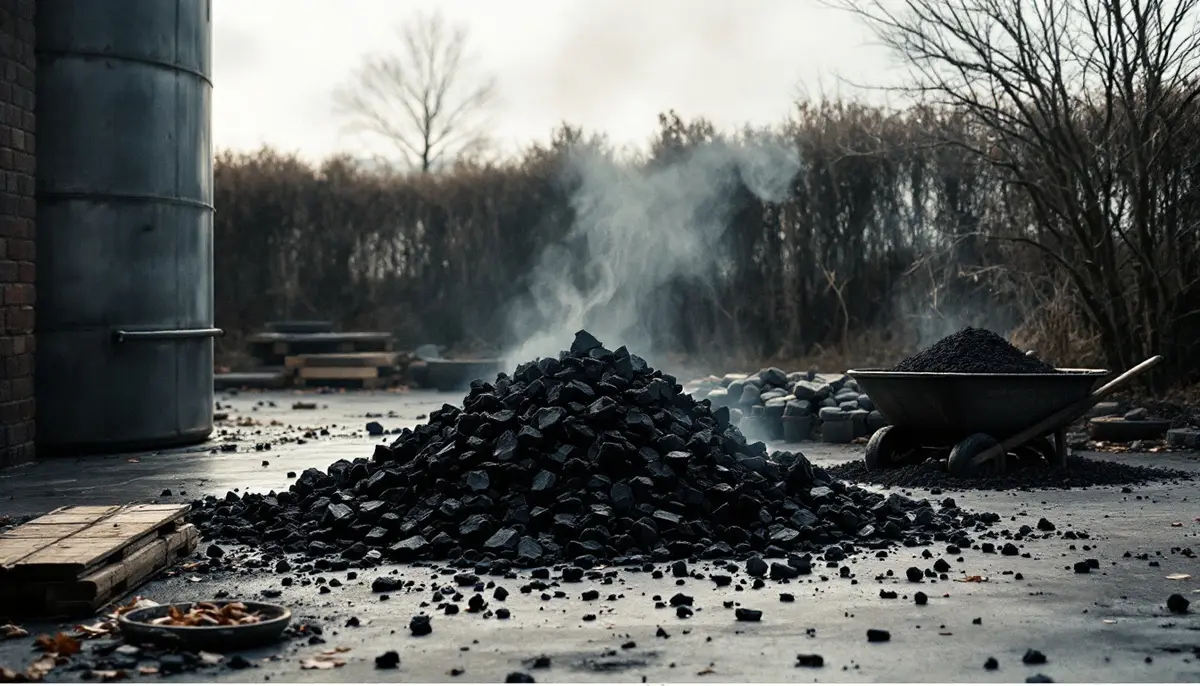
Biochar is charcoal made on purpose for something other than burning. Plant material such as wood chips, nut shells or crop residues is heated to several hundred degrees Celsius with little or no oxygen, a process called pyrolysis. The heat drives off gases and oils and leaves a porous, carbon-rich solid. Dug into soil, it can hold water and nutrients and reduce acidity, and a large share of its carbon can stay locked up for centuries.
That durability is why biochar has moved from gardening forums to climate finance. By most tallies, it now accounts for the largest share of durable carbon removal credits actually delivered to buyers, ahead of more famous methods such as direct air capture. Some of the claims made for it are modest and well supported. Others run ahead of the evidence. This piece tries to separate the two.
How biochar is made
Burn wood in an open fire and almost all of its carbon goes back into the air as carbon dioxide, leaving a little ash. Heat the same wood in a sealed or oxygen-starved chamber and something different happens. The material breaks down into three streams: a gas (often called syngas), a tarry liquid (bio-oil) and a solid char. Slow pyrolysis, at moderate temperatures over hours, maximises the char. Faster processes and gasifiers favour the gas and oil and leave less solid behind.
Production temperatures typically run from about 350°C to 700°C. Higher temperatures give a char that is more porous and more resistant to decay, but less of it. As a rough guide, slow pyrolysis turns something like a quarter to a third of the dry weight of the feedstock into biochar.
How it is made matters as much as what it is made from. A modern pyrolysis plant burns the gases it gives off to heat the process, so little escapes. A traditional earth-mound charcoal kiln, by contrast, can release methane and soot, both powerful warming agents, which can cancel much of the climate benefit. Between the two sit simple open "flame curtain" kilns, cone-shaped steel or earth pits used on farms, where a layer of flame burns off most of the smoke.
Feedstocks vary widely: forestry and sawmill residues, orchard prunings, rice husks, coconut shells, nut shells, manure and, with more care, sewage sludge. Each produces a different char, with different nutrients, pH and contaminants.
Where the idea came from
Interest in biochar owes a good deal to the Amazon. Scattered across the basin are patches of unusually dark, fertile soil known as terra preta, or Amazonian dark earths, created over centuries by Indigenous communities before European contact. They are rich in charcoal, along with pottery fragments, bone and other refuse, and they remain productive in a region where most soils are poor and quickly exhausted. From the late twentieth century, soil scientists asked whether the charcoal could be reproduced deliberately, and the modern word "biochar" was coined as the idea spread.
The analogy is imperfect. Terra preta built up over generations of settlement, with far more going into it than charcoal alone, and nobody has recreated it by spreading char on a field once.
What biochar does in soil
Biochar is not a fertiliser in the usual sense. It contains little available nitrogen, and fresh char can even soak up nutrients for a while, which is why many growers mix it with compost or manure first, a step often called "charging". What it offers is mostly structure and chemistry:
- A liming effect. Most biochars are alkaline, so they raise the pH of acidic soils, much as agricultural lime does.
- Water holding. Its pores hold water, which helps most in sandy soils that drain fast.
- Nutrient retention. Its surfaces hold on to nutrients that would otherwise wash out, and this capacity tends to grow as the char ages in soil.
- Habitat for microbes. The pores offer shelter to bacteria and fungi, though what that means for crops is less clear.
There are side effects to watch for. Biochar can bind some soil-applied herbicides so they work less well. Studies have found it can reduce emissions of nitrous oxide from soil, but the results vary widely with soil type and char. And a dark layer on a pale soil surface absorbs a little more sunlight, a small warming effect that some analyses count against the carbon benefit.
Does biochar increase crop yields?
Sometimes, and mainly where soils are poor. A widely cited 2017 meta-analysis pooling field results found average yield gains of roughly a quarter in tropical soils and essentially none in temperate ones. The likely explanation is that many tropical soils are acidic and heavily weathered, so liming and nutrient retention make a real difference, while the fertile, well-managed soils of temperate farms have less to gain.
Results also depend on the char, the dose and the crop. Trial doses commonly run to several tonnes per hectare or more, which is expensive for a field crop with thin margins. In practice, temperate farmers who use biochar tend to do so for water holding in light soils, for livestock bedding and composting, or because someone is paying them for the carbon, not because it reliably raises yields.
| Claim | What the evidence supports |
|---|---|
| Biochar boosts yields | Often in acidic, weathered tropical soils; rarely in fertile temperate ones |
| Biochar stores carbon for centuries | A stable fraction does, depending on how it was made; the rest breaks down sooner |
| Biochar is a fertiliser | Not on its own; it works best charged with compost or manure |
| Biochar cuts nitrous oxide | In some studies, but results vary widely |
| Any biochar is climate-positive | Only if feedstock is genuinely surplus and production emissions are controlled |
Biochar and carbon removal credits
The climate case is straightforward. Plants pull carbon dioxide from the air as they grow. Left to rot or burned, crop and forestry residues return that carbon to the atmosphere within years. Turned into biochar, a substantial part of it is held in a form that soil microbes find very hard to digest.
The arithmetic is easy to follow. Carbon makes up 12/44 of the weight of carbon dioxide, so a tonne of carbon corresponds to about 3.67 tonnes of CO2. A tonne of biochar that is 80 per cent carbon therefore holds the equivalent of roughly 2.9 tonnes of CO2. Credit methodologies then subtract the share of that carbon expected to decay over the crediting period, usually a century, along with emissions from collecting feedstock, running the kiln and trucking the product. What remains is the credited removal.
How much decays is the central technical question. Standards estimate it from the char's chemistry, usually the ratio of hydrogen to organic carbon, since a more thoroughly carbonised char is more stable. The IPCC added a method for counting biochar in mineral soils to its national greenhouse gas inventory guidelines in its 2019 refinement. A newer line of research argues that well-made biochar lasts far longer than century-scale accounting assumes, a claim that remains debated.
Biochar has two practical advantages over many removal methods. It can be weighed and sampled before it leaves the plant, so the starting quantity of carbon is known with unusual precision. And the technology is simple enough to be deployed by small and mid-sized operators, not only large industrial firms. Both help explain why it has taken such a large share of the durable removal market, at prices well above forest credits but far below direct air capture.
For readers new to the market's vocabulary, our explainer on how carbon credits work covers the difference between avoidance and removal, and the problems of additionality and permanence that every biochar project has to answer.
The limits
Feedstock. Biochar is only as good as its biomass. Genuine residues, such as nut shells or sawmill offcuts that would otherwise rot or be burned, are one thing. Trees cut or crops grown for the purpose are another, and once demand for biomass rises, the line between the two blurs. The same worry runs through the wider biomass economy, where wood pellets and biofuels were sold as carbon neutral long before the accounting caught up.
Contaminants. Chars made from sewage sludge, treated wood or some manures can carry heavy metals or polycyclic aromatic hydrocarbons. Quality standards such as the European Biochar Certificate set limits, but small producers outside any certification scheme are harder to check.
Cost and handling. Biochar is bulky and dusty, so moving and spreading it costs money and energy, and fine char dust needs care.
What happens after it leaves the gate. The weighing is precise; the fate of char once it is spread on a field, mixed into concrete or used in animal bedding relies more on models and periodic sampling.
Scale. Estimates of biochar's global potential vary enormously, mostly according to assumptions about how much biomass can be spared without competing with food, forests and other uses. Biochar was one of the solutions modelled in Drawdown, and it belongs in the toolkit. It is not a substitute for cutting emissions.
Questions to ask about a biochar project
- What is the feedstock, and what would have happened to it otherwise?
- How is the kiln's own smoke and gas handled?
- Is the char certified, and has it been tested for contaminants?
- How does the project estimate the fraction that decays, and over what period?
- Where does the char end up, and who checks?
For a sense of scale on the soil side, the soil carbon calculator turns a soil test's organic carbon figure into tonnes per hectare. A silt loam with 2 per cent organic carbon in its top 30 centimetres holds roughly 78 tonnes of carbon per hectare (2 x 1.3 x 30, taking a typical bulk density of 1.3 grams per cubic centimetre). Ten tonnes of biochar at 80 per cent carbon would add 8 tonnes, a meaningful but not dramatic increase, and of a different and more stable kind than the organic matter already there. Our earlier guide to what soil carbon science can promise explains why that difference in stability matters so much to the carbon markets.

Written by Iris Calloway
Iris follows climate negotiations, carbon markets and the growing list of proposals to engineer the climate itself, from solar geoengineering to ocean fertilisation. She is interested in who gets to decide, and who carries the risk.