What are heirloom seeds? The meaning, the myths and how to save your own
· 8 min read · by Marisol Ortega
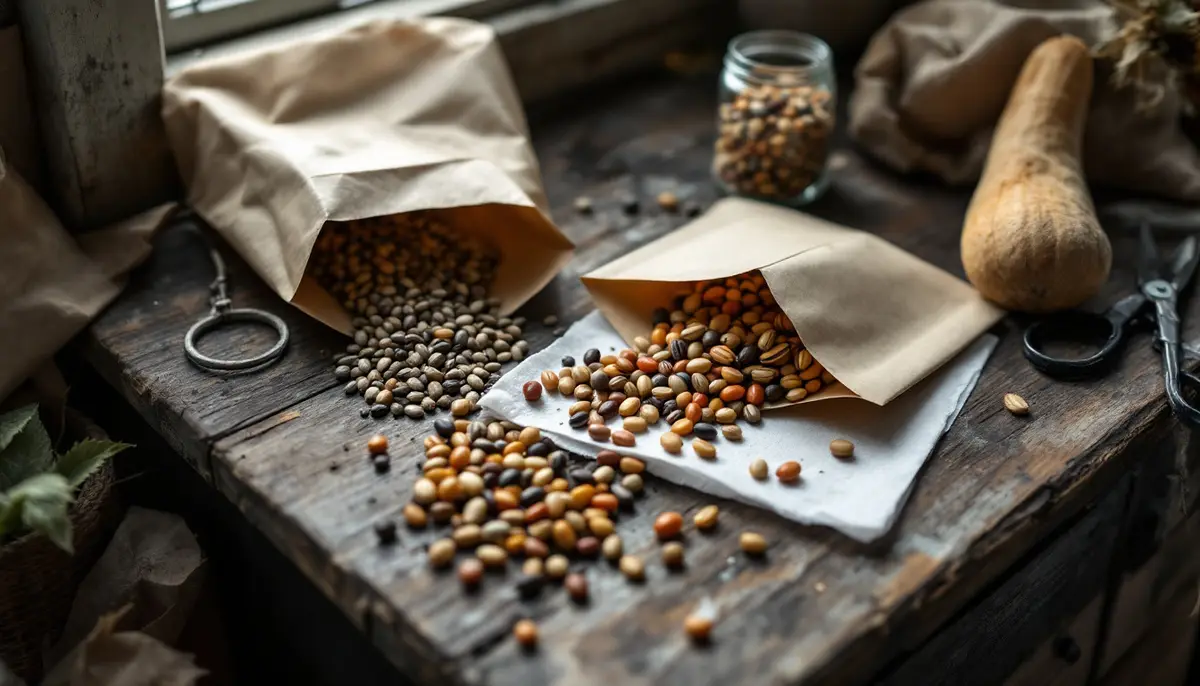
Heirloom seeds are seeds of old open-pollinated varieties that have been grown, saved and handed down over many years, usually by families, communities or small seed houses. Because they are open-pollinated, the seed you save from an heirloom plant grows into a plant much like its parent. That is the whole reason they survived: someone kept the best fruit, dried the seed, and planted it again the next spring, for decades.
There is no legal definition of an heirloom. Some growers use fifty years as the cutoff. Others say a variety must predate the spread of commercial hybrids in the middle of the twentieth century, and some keep the word for varieties a century old or more. What they agree on is that an heirloom is open-pollinated, has a history, and has been kept alive by people saving its seed.
Open-pollinated, hybrid, heirloom: untangling the words
Seed packets throw these terms around as if everyone knows them. Here is what each one means.
| Type | How it is made | Does saved seed grow true? | Examples |
|---|---|---|---|
| Open-pollinated | Pollinated by insects, wind or the plant's own flowers, within a stable population | Yes, if kept from crossing with other varieties | Most heirlooms, plus many modern varieties |
| Heirloom | An open-pollinated variety with years of history behind it | Yes | 'Brandywine' and 'Cherokee Purple' tomatoes, 'Jacob's Cattle' bean |
| F1 hybrid | A deliberate cross between two inbred parent lines | No; the next generation varies | 'Early Girl' and 'Sungold' tomatoes |
| Genetically modified | Genes changed with laboratory techniques | Depends on the crop, but contracts usually bar saving it | GM field corn, soybeans, cotton |
Three things follow from that table. Every heirloom is open-pollinated, but not every open-pollinated variety is an heirloom. A hybrid is not a GMO; it is made by crossing two parent plants, the way breeders have worked for well over a century. And "heirloom" says nothing about how the seed was grown, so heirloom seed can be organic or not.
Why hybrid seed does not come true
A first-generation hybrid is uniform because every plant inherits one set of genes from each inbred parent. Save seed from those plants, though, and the genes reshuffle. Some offspring look like one grandparent, some like the other, and many fall in between. With a single gene you get the familiar ratios you can work out on our Punnett square tool; with the dozens of genes that shape a tomato's size, flavor and disease resistance, you get a mixed bag.
That is good business for seed companies, because a farmer who wants the same performance has to buy fresh seed every year. Hybrid corn spread across the US Corn Belt in the 1930s and 1940s on the strength of its yields, and with it came an annual seed bill. Over the following decades, as seed companies merged and catalogs shrank, many older vegetable varieties dropped out of commerce altogether. The long story of how the seed business narrowed to a big four is part of why so many heirlooms survived only in backyard gardens and seed exchanges.
Where heirlooms come from
Heirlooms reach us by a few different roads.
Family heirlooms are the ones with the best stories: the bean a great-grandmother carried in her apron pocket from the old country, the tomato a neighbor has grown on the same hillside for sixty years. Seed Savers Exchange, the large US seed-saving network, began in 1975 when a couple in the Midwest set out to keep a family's seeds going, among them a morning glory and a tomato that had come from Bavaria.
Commercial heirlooms were released by seed companies generations ago and kept alive after they dropped out of the catalogs.
Created heirlooms, sometimes called new heirlooms, come from deliberate crosses that gardeners have grown out and stabilized over several generations until they come true from seed. Purists argue about whether they deserve the name.
In much of the world the better word is landrace. A landrace is a locally adapted crop population kept by farmers, like the many maize types of Mexico or the rice varieties of a single valley in Asia. It is usually more variable than a garden heirloom, which is part of its strength: a field of slightly different plants has a better chance of carrying something that survives a bad year. Landraces and the farmers who keep them are exactly what modern seed laws struggle to fit, as our guide to UPOV 91 and seed laws explains.
Saving heirloom seed: the basics
You do not need special equipment to save seed. You need to know a little about how each crop is pollinated, and a dry place to keep what you harvest.
Start with the easy crops
Beans, peas, lettuce and most tomatoes pollinate themselves, often before the flower even opens. That makes them the best place to start. Let a few bean pods dry brown on the plant, shell them, and you have next year's seed. A few old tomato varieties with flowers that hold their stigma out beyond the petals cross more easily, so give those some distance from other tomatoes.
Know which crops cross
Squash, cucumbers, melons, corn, beets, onions, carrots and the cabbage family are pollinated by insects or wind and will cross with other varieties of the same species nearby. Squash catches people out most often. Zucchini, acorn squash and many pumpkins belong to the same species and cross happily, while a butternut belongs to another species and will not cross with a zucchini. To keep a variety pure you can grow only one per species, separate varieties by a good distance, or tape flowers shut and pollinate them by hand.
Corn needs special care. Its pollen rides the wind, and saving seed from just a few plants leads to inbreeding and weaker plants over time. Seed savers aim for a large population, dozens of plants at the very least and ideally a hundred or more.
Plan for biennials
Carrots, beets, cabbages, kale and onions flower in their second year. Where winters are hard, that means digging roots and storing them, or protecting plants in the ground, then replanting them in spring to set seed.
Select with care
Save seed from several good plants, not just the single biggest fruit. Pull out plants that look wrong for the variety before they flower. Selecting from many plants keeps the diversity that makes an open-pollinated variety adaptable.
Clean, dry and store
Dry seeds such as beans, peas, lettuce and brassicas are left to dry on the plant, then threshed and winnowed. Wet seeds from tomatoes and cucumbers are scooped out with their pulp, left to ferment in a little water for a few days, rinsed and dried on a plate. Store seed somewhere cool, dark and dry, in a sealed jar with a label.
Seed does not last forever. Onions, leeks and parsnips are usually good for only a year or two, while tomatoes, cucumbers and squash can keep for four or five years in good conditions. A simple germination test settles the question: roll ten seeds in a damp paper towel, keep it warm for a week or so and count the sprouts. Our seed viability calculator turns that count into how many seeds to sow per hole.
Seed libraries and swaps
You do not have to start alone. Seed libraries, often run from a shelf in a public library, let you borrow a packet, grow it out and return some of the seed you save. Winter seed swaps do the same thing in a crowded room with folding tables. In the mid-2010s a few US seed libraries were told that they fell under commercial seed laws written for companies, and several states then changed their laws to exempt noncommercial seed sharing.
In much of Latin America and Africa the equivalent is the community seed fair, where farmers bring jars and sacks of their own varieties to trade. Those fairs keep far more diversity in circulation than any catalog.
Why heirlooms matter
Old varieties are a living library. One may carry resistance to a disease that has not arrived yet, another tolerance for heat or drought, another a flavor that breeders want back. Plant breeders return to old varieties and landraces again and again when they need a trait that modern lines have lost.
Uniformity carries its own risk. The Irish famine of the 1840s struck a country that depended heavily on a narrow range of potatoes, all vulnerable to the same blight. The FAO has estimated that around three-quarters of crop genetic diversity was lost during the twentieth century as farmers moved to uniform modern varieties. The exact figure is debated; the direction is not.
Gene banks, including the Svalbard Global Seed Vault in Norway, store backup copies of more than a million seed samples, and that matters. But a seed in a freezer is not adapting to anything. Seeds grown out year after year in gardens and fields keep changing along with the local climate, pests and tastes of the people who grow them.
None of this makes heirlooms perfect. Some are low-yielding, prone to disease or prone to cracking. Their reputation for flavor is often deserved, since many were selected for the table rather than for shipping, but not every heirloom is delicious. And new open-pollinated varieties are still being bred, by small seed companies, university programs and projects such as the Open Source Seed Initiative, which asks breeders to keep their varieties free to save and share.
Further reading
If you want to go deeper, two books from the seed-saving world are the standard references. Seed to Seed by Suzanne Ashworth is a crop-by-crop manual of pollination, isolation and seed cleaning. The Seed Garden, from Seed Savers Exchange, explains the biology behind seed saving with clear photographs.
Frequently asked questions
Are heirloom seeds GMO?
No. Heirlooms are open-pollinated varieties bred and kept by gardeners and farmers long before genetic engineering existed.
Are heirloom seeds organic?
Not necessarily. "Heirloom" describes the variety, while "organic" describes how the seed crop was grown. A packet can be both, either or neither.
Can I save seed from hybrid plants?
You can, but the plants that grow from it will vary and many will be disappointing. Some gardeners do it on purpose, selecting the best offspring over several years to create a new open-pollinated variety.
Do heirloom vegetables taste better?
Many people think so, and many heirlooms were selected for flavor. But taste depends on soil, weather and ripeness too, and a fresh-picked hybrid tomato can beat a tired heirloom.

Written by Marisol Ortega
Marisol covers seeds, smallholder farming and the rules that decide who may save, swap or sell them. She has spent a long time around maize fields and seed fairs and still thinks maize is the most political plant there is.